
The Word That Does Not Translate
Ikigai is one of the most mistranslated words in the Western wellness vocabulary. The four-circle Venn diagram, passion, mission, vocation, profession, does not appear in any Japanese source on the subject. It is a Western invention, grafted onto a word that was never asking the questions that diagram is trying to answer.
In Japan, ikigai is quieter. It is not a framework for career design. It is the word for the thing that already gets a person out of bed in the morning. Not what should. What does.
The distinction matters more than it seems. A purpose is something you set. A reason is something you have. One is aspirational and often exhausting. The other is observational and often quiet.
—
Small, Specific, Real
In Okinawa, where more centenarians live per capita than anywhere on earth, ikigai is not a life goal. It is the thing you already do. The gardener who knows each of her tomato plants by name. The fisherman who, at eighty, still goes out at dawn because the sea is his rhythm. The grandmother whose reason for getting up is the walk to the market and the people she will see on the way.
It is small, and specific, and real. It does not need to be grand. It does not need to be productive. It does not need to be named in public.
'A purpose is something you set. A reason is something you have.'
—
Why Travel, Then
If ikigai is already in us, the question for a traveller becomes not where to go but what to return to. A good trip, in the Japanese sense, is not a distraction from your life. It is a thing that feeds what you already care about. A meal that returns you to the table at home with something new to cook. A walk that sharpens your eye for the garden you have been half-tending. A conversation with a stranger that reminds you of a friendship you have been neglecting.
This is not a small idea. It is the whole reason Agent Nouveau exists the way it does.
When a client walks into No.82, the conversation does not begin with destinations. It begins with a question closer to the one Okinawan grandmothers have been answering for centuries. How do you want to feel when you get there, and what do you want to bring home?
A trip that answers those questions is a trip that nourishes ikigai rather than replacing it. That is the difference between a holiday you recover from and a holiday you carry.
—
On the 30th
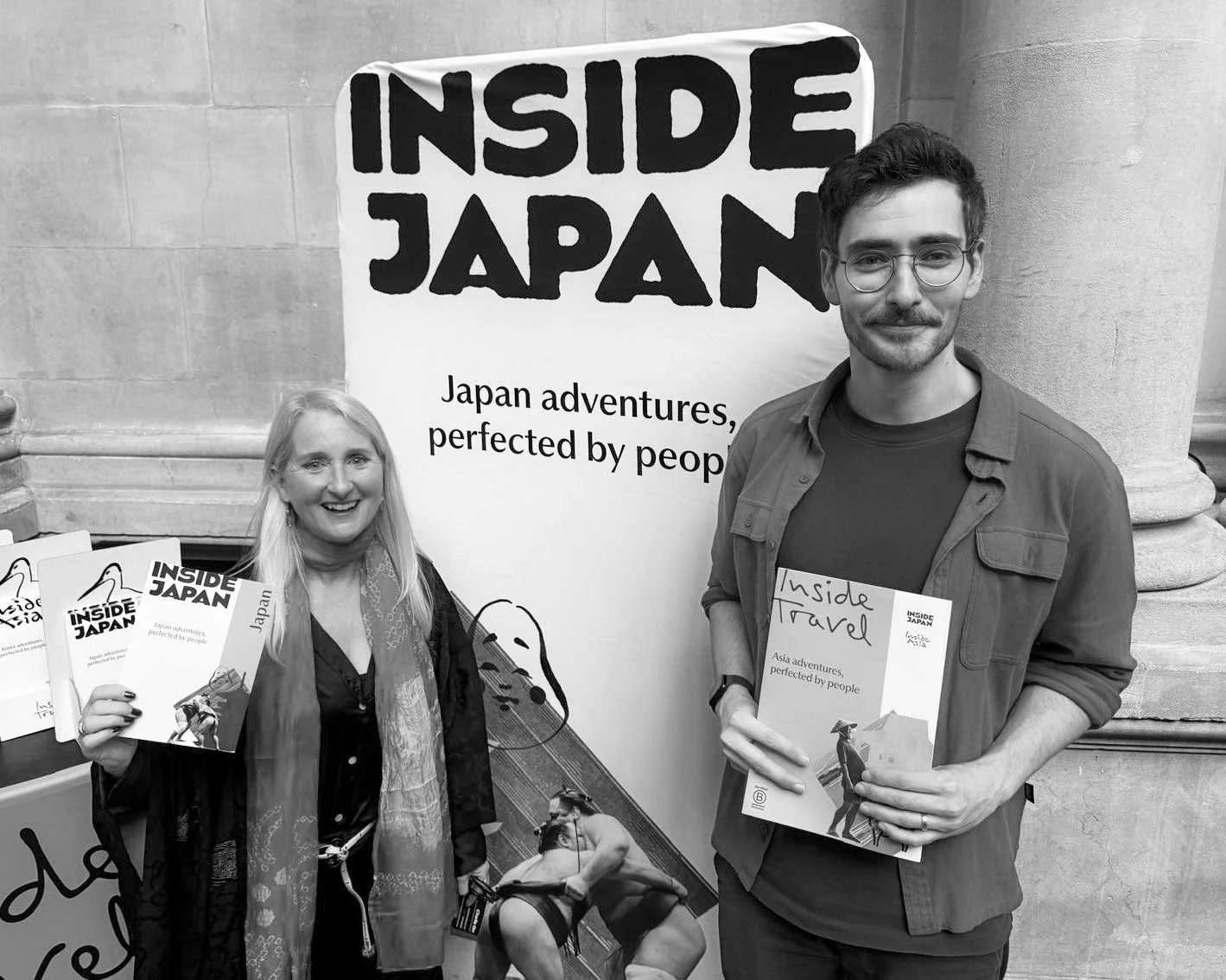
Barbara Cox spent a decade in Nara, living within walking distance of temples where generations of families had been pursuing small, specific, real things. On Thursday 30th April, she brings what she observed there to the table at No.82, alongside Charlie from InsideJapan Tours, for an evening of sushi, drinks, and a live Chadō tea ceremony. Ikigai will be one of six longevity rituals discussed across the night.
Ten seats. One table. The kind of conversation that might, if you let it, change the question you ask yourself tomorrow morning.
Come find us at No.82.