
Have you ever found a hotel you absolutely love the look of, only to notice another little name sitting underneath it?
Leading Hotels of the World. Relais & Châteaux. The Luxury Collection. Autograph Collection.
You might never have heard of the hotel itself, but suddenly there's something familiar there. A name you recognise, perhaps from somewhere you've stayed before, and almost without realising it, you feel a little more confident about the place you've just discovered.
We were talking about this at No.82 recently because it happens all the time when we're looking for hotels for our clients. We'll come across somewhere completely new (perhaps a beautiful old house in the countryside, a tiny hotel hidden on a Greek island or somewhere tucked away on a coastline we already love) and then spot that it belongs to a collection we know.
It got us wondering how much that second name actually matters.
—
There's something lovely about a hotel with a story
Because some of the loveliest hotels in the world aren't necessarily the ones everybody has heard of. Sometimes they're the ones you need a little help finding.
One of the things we love about independent hotels is that they tend to have a life of their own.
They weren't all created from the same blueprint. The rooms might be slightly different from one another. There may be an old staircase that creaks a little, a garden somebody has been tending for decades, or a terrace that catches the evening sun so beautifully that everyone gravitates towards it before dinner.
That individuality is often exactly why we fall for them.
Gravetye Manor in West Sussex is a perfect example.
It's now part of Relais & Châteaux, but its story began hundreds of years before hotel collections were even a thought.
The house was built in 1598 by Richard Infield for his bride, Katharine Compton, and their initials can still be found carved into the stone above the doorway to the formal garden. Their portraits are even carved into the oak above one of the bedroom fireplaces.
Then, in 1885, pioneering gardener William Robinson bought Gravetye and made it his home, creating the gardens that still surround the house today.
It finally became a hotel in 1958.
We love places like this because you're not simply checking into a lovely room for the weekend. You're stepping into somewhere that has been lived in, loved and changed over hundreds of years.
Relais & Châteaux hasn't created that story. Gravetye already had it.
'Relais & Châteaux hasn't created that story. Gravetye already had it.'
—
A little reassurance can be a lovely thing
But if you'd never heard of Gravetye before and noticed that familiar Relais & Châteaux name beside it, you might feel a little more comfortable taking a chance on somewhere new.
And that's where we think these collections become interesting.
Travel should always have an element of discovery to it. We'd hate to lose that.
But there are also times when you're spending a considerable amount on a holiday, travelling somewhere you've never been before and placing quite a lot of faith in a hotel you've only ever seen through a screen.
A little reassurance is no bad thing.
Leading Hotels of the World now has more than 450 member hotels, while Preferred Hotels & Resorts has more than 600 properties around the world. Relais & Châteaux receives hundreds of enquiries and applications from hotels hoping to join its collection, with only a relatively small number ultimately being accepted.
So when you see one of those names sitting alongside an unfamiliar hotel, it gives you another little piece of the puzzle.
Someone has already looked more closely.
Of course, that doesn't automatically mean it's the right hotel for you.
And that part matters.
You might be dreaming of mornings where you can wander barefoot from your room to the sea, while somebody else wants to step outside the hotel and immediately be among little restaurants and bars. One family might want a resort where everything is taken care of, while another would feel much happier somewhere small enough that the person making their coffee knows their name by day two.
A collection can tell us a lot about a hotel.
It can't tell us how you want to feel when you're there.
'It can't tell us how you want to feel when you're there.'
—
Sometimes the name itself becomes part of the holiday
Then there are the hotel names we come to know and trust in their own right.
Sani is one we talk about often at No.82, particularly with families.
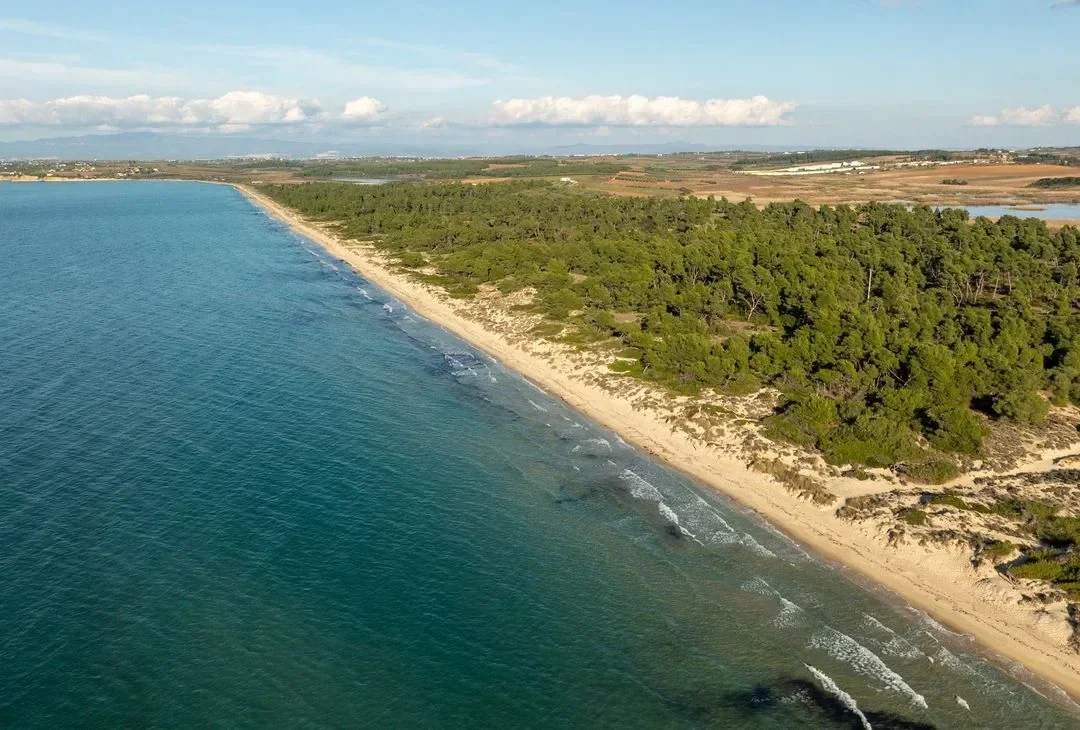
Its story began in 1970, when one family created a beach resort on Greece's Kassandra peninsula. Today it sits within a thousand-acre nature reserve, surrounded by seven beaches and around 300 acres of old-growth Aleppo pine forest.
What we love is that despite everything that has grown around it, there is still such a strong sense of place.
The Tower of Sani has stood there since around 1400. The pine forest was there long before the first guest arrived. And when you walk down towards the marina in the evening, there's still that unmistakable feeling of being in Greece.
The same family later created Ikos, taking their approach to hospitality beyond Sani and into other parts of Greece and Spain.
And once you've stayed at one and loved it, there's a natural confidence that comes with choosing another.
You already know a little of what to expect.
Not every detail will be identical, nor should it be, but there's a familiarity in the way you're looked after.
Domes has created something similar while keeping a very strong sense of individuality between its hotels.
Domes Miramare in Corfu is one we particularly love the story of. It sits among a century-old olive grove and was created by the Onassis family in the late 1960s, so there's a little of that old Corfu glamour still lingering around the place.
Today it is both a Domes resort and part of Marriott's Luxury Collection.
Two names beside the same hotel, each telling you something slightly different about what you're going to find when you arrive.
—
So, should you look for the name?
Yes and no.
Helpful, we know.
We certainly notice hotel collections when we're looking at somewhere new. They can give us confidence and sometimes introduce us to beautiful independent hotels we might otherwise have missed.
But they're never where the conversation ends.
Because choosing a hotel is such a personal thing.
We want to know whether you're the person who loves breakfast lingering into lunchtime or whether you're up at seven and already thinking about where you're exploring that day. Whether you want a huge resort where you barely need to leave, or somewhere with six lovely restaurants within a ten-minute walk.
Do you want music around the pool or somewhere wonderfully quiet?
A beach you can walk for miles or a little cove where the water barely moves?
A beautiful room you'll spend very little time in, or a terrace where you fully intend to disappear with a book for an afternoon?
Those things tell us far more about where you should stay than a logo ever could.
And perhaps that's why we find hotel collections so interesting. They give us a lovely place to begin, but the really enjoyable part is finding the hotel within them that feels as though it was made for you.
So next time you spot a second name sitting underneath a hotel, have a look at it. It might just lead you somewhere you wouldn't have found otherwise.
And if you'd rather not spend your evening disappearing down a rabbit hole of hotel websites, come and see us at No.82 instead.
We rather enjoy doing that part!
Come find us at No.82.
hello@agentnouveau.com