
Where the Light Goes in January
A direct flight from Gatwick to Mauritius in January takes eleven hours and fifty-five minutes. Land, and the sky gives you thirteen hours and fifteen minutes of daylight before it does it again tomorrow, nearly three hours more than the day you left. None of that sits on the price comparison you were looking at an hour ago, and it is the difference between a January that restores you and one that only relocates you.
It's a fair question every January: which winter-sun region is the right one, as if there's a single correct answer sitting behind the brochure. There isn't one. There's a real trade, in hours flown, hours of daylight, and what the sky does in that specific place in January, and nobody prices that trade out for you. We priced it out instead, across six coasts, three oceans.
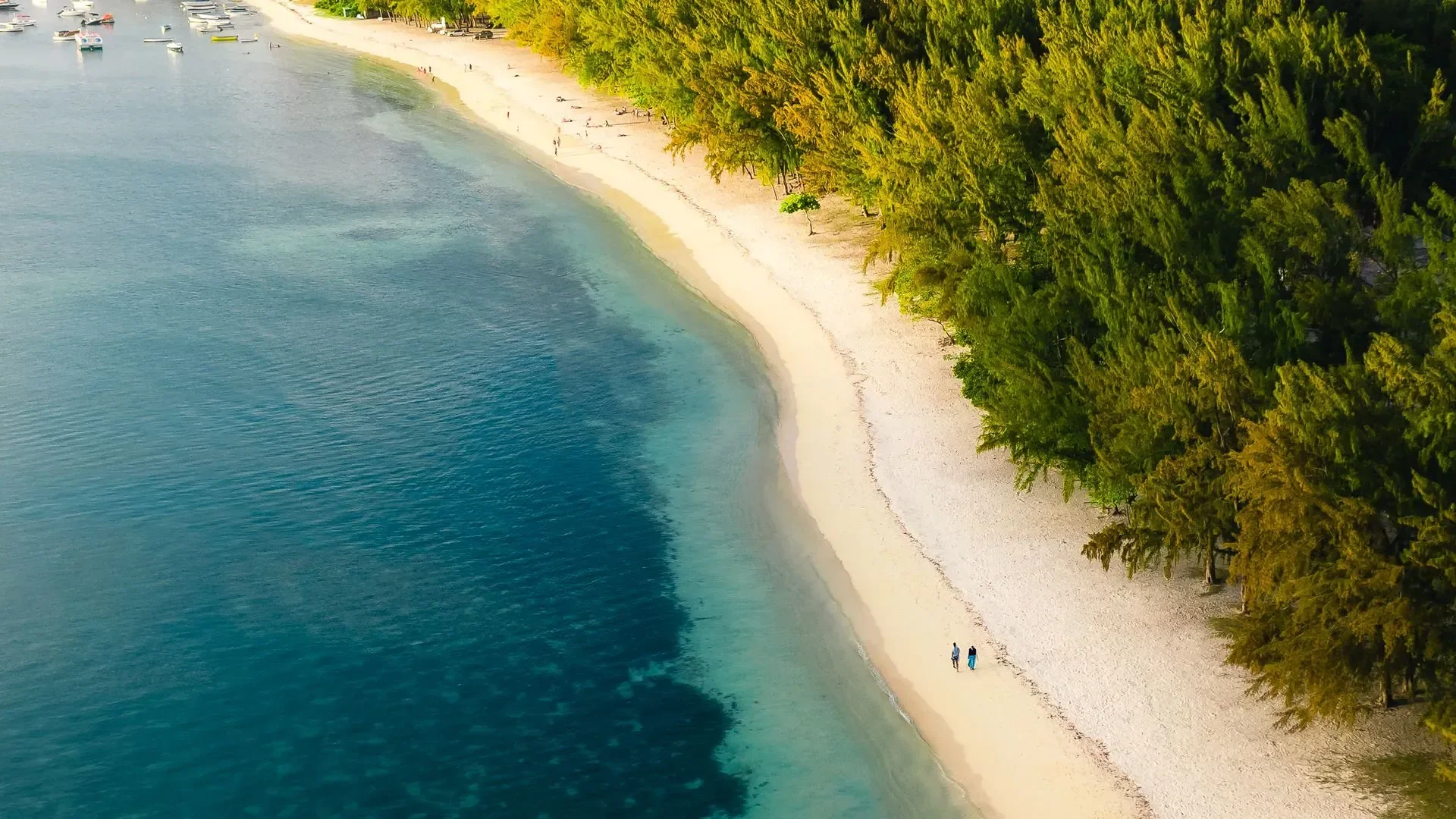
The Indian Ocean's Long Way Round
Fly to Mauritius and you're on British Airways' nonstop from Gatwick, eleven hours and fifty-five minutes, not from Heathrow as people often assume, and not on Virgin Atlantic either, whose old Heathrow route closed some years back. Fly to the Maldives and two airlines run it nonstop from Heathrow, British Airways year-round and Virgin Atlantic across the winter season, around ten and a half hours either way. Mauritius gets thirteen hours and fifteen minutes of daylight a day this month, the Maldives close to twelve. Both leave the cyclone question wide open, and it splits the two islands cleanly down the middle.
Mauritius sits inside the Indian Ocean's genuinely active window: the island's own meteorological service runs its cyclone season from November to the middle of May, and its historical records list named storms making landfall in January across five separate decades. The Maldives sits close enough to the equator that a cyclone has never once tracked directly over it, and it isn't even counted in the same regional basin as Mauritius. Two islands, similar flight, same ocean, a genuinely different risk. Tell us which one you'd rather carry, and we'll build the January around it.
'Two islands, similar flight, same ocean, a genuinely different risk.'
The Caribbean's Honest Season
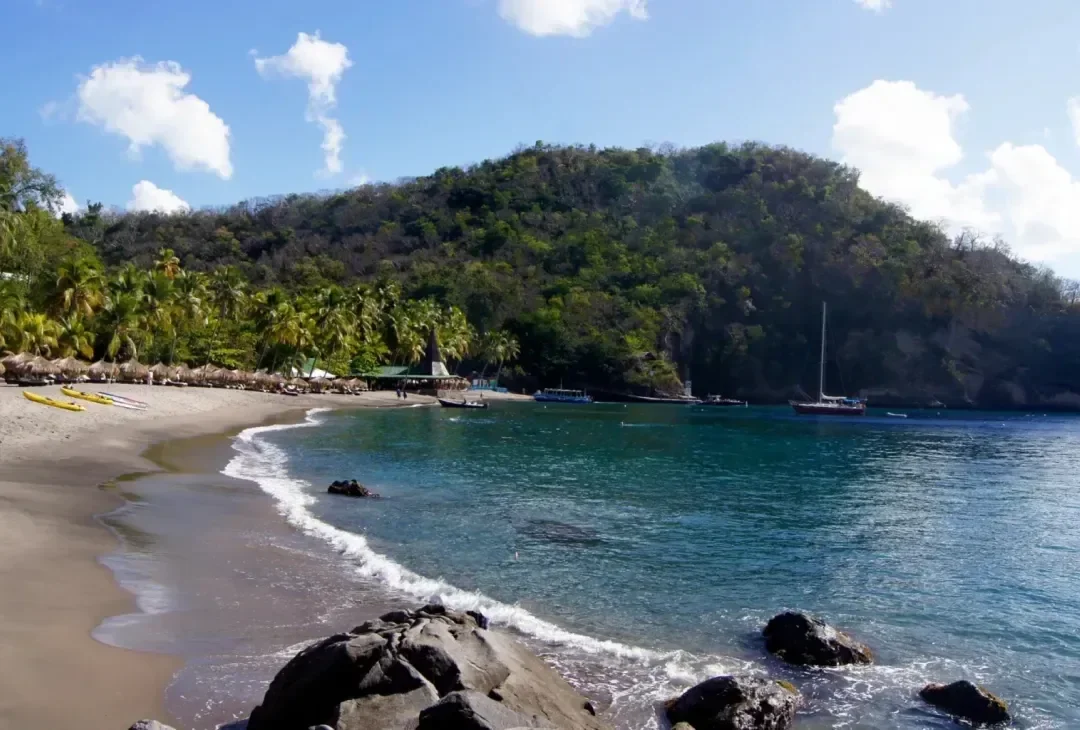
The Caribbean earns its winter-sun reputation for a plain reason: the Atlantic hurricane season, as the US National Hurricane Center defines it, runs from the first of June to the thirtieth of November. January sits entirely outside it. Barbados and St Lucia both fly nonstop from the UK, British Airways from Heathrow to Barbados year-round at around nine hours, and from Gatwick to St Lucia daily at roughly the same length. Saint Lucia's own meteorological service puts its dry season at December through May, with January rainfall running under half of what falls in the wet months. Daylight sits over eleven hours on both islands, the shortest of the three oceans compared here, still an hour and a half more than a Dorset January gives you. It's the bucket we'd point a first-time long-haul family towards, if a settled week matters to you more than the distance.
Close Enough to Feel the Difference
Madeira is the fastest way out of a British January by a wide margin: British Airways flies Gatwick to Funchal in around four hours, and easyJet's Luton route runs close to three and three-quarter. Madeira in January is not a hot-weather escape. If you're picturing a short dash into guaranteed heat, we'd rather tell you that now than let the flight time do the persuading. The island's own meteorological service, IPMA, recorded a January mean air temperature of seventeen degrees this year, with real rain: the month opened under a named low-pressure system bringing what the service called intense and persistent rain and strong wind, and closed under another frontal passage. The Red Sea trades some of that speed for a markedly warmer, drier January: the flight to Hurghada runs closer to five and a half hours on TUI, and the days sit around twenty two degrees with next to no rain, though the desert gives the evenings back, dropping to around eleven degrees after dark. Daylight sits close on both coasts, ten hours seventeen minutes in Madeira, ten hours thirty nine on the Red Sea, and the choice between them comes down to what you would rather trade: speed for Madeira, or warmth for the Red Sea.
'Madeira in January is not a hot-weather escape.'

The Number We Won't Invent
There's one figure missing from every comparison above on purpose: sea temperature. We looked for a January reading from a national meteorological service, from NOAA, or from Europe's own ocean-monitoring service, for any of the six places you're weighing up here, and none of them publish one. Every average sea temperature circulating online for these coasts traces back to a booking site with no stated source behind it, not to a scientific body willing to put a number on the record. We're not going to hand you one we can't stand behind. What we can put on the record is the flight, the daylight, and the sky, because those are the figures that were willing to be checked.
'We're not going to hand you one we can't stand behind.'
Where We'd Point You
None of the six places above is the right answer, only a different trade: distance and risk in the Indian Ocean, reliability over miles in the Caribbean, speed over warmth closer to home. We don't think you should have to work that out from a spreadsheet. Come and sit down with us, tell us what matters to you this January, the flight, the light, or the sky, and we'll set out the honest version of the coast that answers it, not the brochure one. If what you're picturing moves rather than stays in one place, come and ask us about that too.
Come find us at No.82.
hello@agentnouveau.com