
The Reef That Never Sees Winter
The hotel group you will meet in Mauritius started with forty rooms, and the people who slept in them were mostly flight crews between longer journeys, not holidaymakers. That was 1952, the Park Hotel in Curepipe, the year Beachcomber later marked as its beginning. Seventy-four years on, the same name runs eight hotels across one small island, and the chances are you have only ever heard of one or two of them.
We are writing about Mauritius this month because it does the one thing a British January cannot manage on its own: it flips the season entirely. And we are writing about Beachcomber specifically because eight hotels on one two-thousand-square-kilometre island is a serious position to hold, built up over seven decades rather than one resort chasing attention. Two of those eight are worth knowing by name, and so is the reef that ties the whole island together.
—
The Reef That Rings the Island
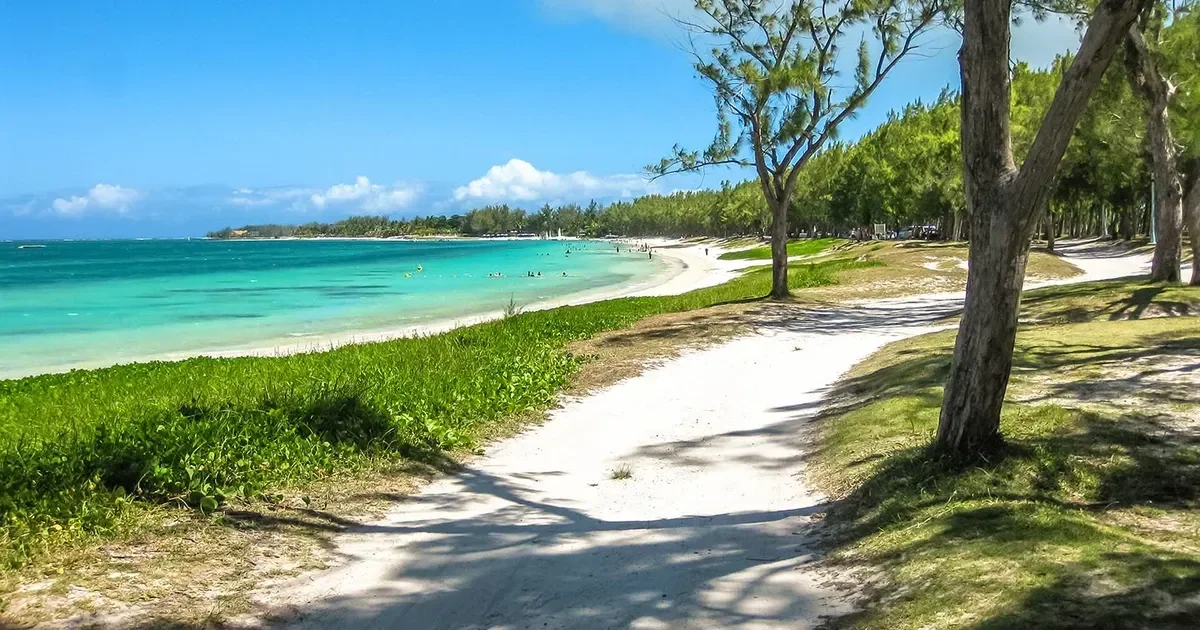
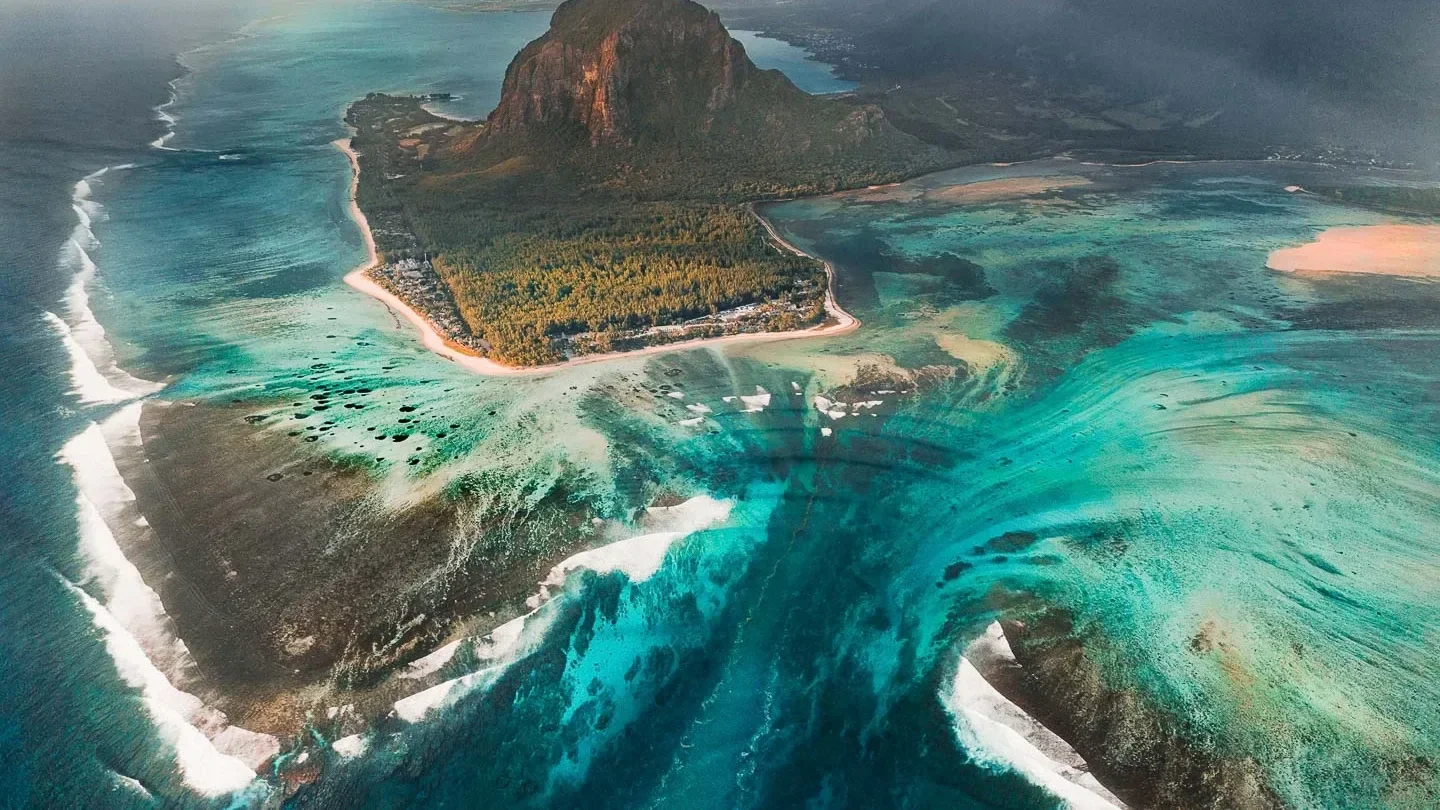
Mauritius has a small landmass and an outsized coastline. The whole of it, some hundred and sixty kilometres, is fringed almost end to end by coral reef, roughly a hundred and fifty kilometres of it, sheltering the turquoise lagoons that appear in every photograph of the island and are somehow still better when you are standing in one. An estimated hundred and thirty-eight coral species live in these waters. The reef breaks here and there at surge channels and river mouths, which is why some beaches face a lagoon so calm it barely moves, while others catch open ocean within a few hundred metres of the same shoreline.
The island itself is volcanic, a little over two thousand square kilometres, sitting roughly two thousand kilometres off the south-east coast of Africa and nine hundred east of Madagascar. It is genuinely remote, and in January that is rather the point of going.
'The reef breaks here and there at surge channels and river mouths, which is why some beaches face a lagoon so calm it barely moves, while others catch open ocean within a few hundred metres of the same shoreline.'
—
Grand Baie
Royal Palm Beachcomber Luxury sits on the bay of Grand Sable, a five-minute walk from the centre of Grand Baie village, on a stretch of the north-west coast where the trade winds are kept out and the lagoon stays close to still. Open the doors in the morning and there is no chop on the water to listen to, which takes a day or two to get used to. Every one of the sixty-nine suites faces the ocean, so whichever one you are given, that is the view you wake to, and there is a single Royal Villa with a pool of its own if you would rather not share. Three restaurants, a spa run in partnership with Valmont, and staff who are called Artisans rather than anything more corporate, Beachcomber's own name for people trained to notice what you haven't asked for yet.
Royal Palm belongs to The Leading Hotels of the World, and if you play, Mont Choisy Le Golf is an eighteen-hole course about ten minutes away. Of Beachcomber's eight Mauritius properties, this is the most intimate: sixty-nine suites is a small number for a resort of this standing, and it is deliberate. You will be recognising faces by the second morning, which is either exactly why you would choose it or exactly why you wouldn't.
—
Le Morne
On the other side of the island, on the western coast of the Le Morne peninsula, Dinarobin Beachcomber Golf Resort & Spa sits at the foot of Le Morne Brabant, a basalt mountain that rises five hundred and fifty-six metres straight out of the sea. You do not so much look at it as stand underneath it, and it is behind you every time you turn back from the water. UNESCO listed the mountain as a World Heritage Site in 2008, the Le Morne Cultural Landscape, recognising its history as a refuge for escaped slaves in the eighteenth century. Worth knowing before you go rather than after, because it changes what you are looking at.
Dinarobin opened in 2001, so it has spent twenty-five years in the mountain's shadow, and it shares its beachfront and eight restaurants with the adjoining Paradis Beachcomber next door, which means you can walk to dinner along the sand and still have somewhere new to eat by the end of the week. Between the two resorts you have two eighteen-hole golf courses, and an IKO-affiliated Kitesurf School runs straight off the beach, on a stretch of coast recognised as one of the island's better kitesurfing runs. If you have never had a board pull you off your feet, this is a forgiving place to find out.
'Dinarobin opened in 2001, so it has spent twenty-five years in the mountain's shadow.'
—
What Comes to the Table
The food follows the same layered pattern as everything else here, and you will taste all of it inside a week. Indian spicing, the turmeric and cumin and coriander behind the curries and biryanis and pickled chutneys that arrive at your table; Creole techniques rooted in the plantation era; Chinese dishes such as fried noodles and dumplings; and French sauces, pastries and gratins, turning up at breakfast as though nobody had told the kitchen it was the tropics. Four traditions at once, often on the same plate.
The national dish sits at the crossroads of most of that, and you will not find it in a dining room. Dholl puri is a thin flatbread made from ground yellow split peas, folded around rougaille and a smear of bean curry, sold on street corners across the island and eaten standing up. It is street food, not a hotel dish, and it is where the island's four traditions meet. Have one before you have anything else.
—
Their Own January
January in Mauritius is not winter. It is deep summer, one of the warmest stretches of the year, daytime temperatures typically between twenty-five and thirty degrees and the sea close behind at around twenty-eight. It is also genuinely wet-season weather rather than wall-to-wall sunshine, so expect around nine rain days across the month, alongside eight or nine hours of sunshine most days, and humidity around eighty per cent. No direct flight runs from Heathrow, so you would go from Gatwick: Air Mauritius moved its UK base there in 2023 and now flies non-stop alongside British Airways, a little under twelve hours each way.
'January in Mauritius is not winter. It is deep summer, one of the warmest stretches of the year.'
—
What We Would Do
Mauritius was the theme of one of our supper clubs back in April. It seemed the right place to return to, in a piece of its own. We would send you to Royal Palm if the week you want is quiet and close to the village. We would send you to Dinarobin if you want the mountain at your back and a kitesurf lesson within easy reach. Either way, it is January on the other side of the world, doing exactly what August does here, and we would love to talk you through which one fits.
Come find us at No.82.
hello@agentnouveau.com