
The Itinerary That Goes Cold Before It Goes Warm
The rim of the Ngorongoro Crater sits at roughly 2,280 metres, high enough that the night air up there can drop close to freezing, cold enough to have you reaching for a fleece, while the crater floor below holds onto the day's heat. Sea temperatures off Zanzibar, a little over an hour away by air, run closer to 30°C in the same month. Not many single itineraries ask you to pack a fleece and reef-safe sunscreen for the same fortnight, but a well-built January trip to Tanzania does exactly that.
No client is attached to this one. We built it ourselves, in August, the way we would for anyone who walked through the door at No.82 and asked for a January escape… two safari nights, three coastal nights, worked out leg by leg because getting the route right is the part of the job we like best.
—
Two Flights, Not Three
No airline flies directly between London and Kilimanjaro, so the first day of this trip is decided months in advance, by which connection you choose. Land wrecked from an overnight layover and the first game drive at dawn feels like an ordeal rather than the reason you came.
Fly via Amsterdam and KLM takes you the whole way with a single aircraft change: a short hop to Schiphol, then the only nonstop service between Amsterdam and Kilimanjaro, a Boeing 787 that covers the route in around eight and a half to eight and three-quarter hours. Add the London leg and the whole journey runs to roughly ten hours in the air, landing at a sensible hour rather than the small hours of the morning.
Fly via Doha instead and the long-haul leg alone is shorter, around five and a half hours on Qatar Airways' only nonstop service into Kilimanjaro. But the leg to Doha from London takes closer to seven hours than six, and the connecting flight typically leaves in the small hours of the morning, a departure that leaves you dozing through your first sight of Kilimanjaro from the air rather than watching for it.
We chose Amsterdam. Two flights, one change, and a traveller who lands ready for dust and early starts rather than needing a day to recover first.
'We chose Amsterdam. Two flights, one change, and a traveller who lands ready for dust and early starts rather than needing a day to recover first.'
—
The Order of It
Safari first, coast second. Not the other way round.
A long-haul flight followed directly by early starts, dust, and a five-hour time difference from home asks a lot of the first two days of any trip. Put the coast first and the safari becomes the thing you are packing up to leave for, rather than the thing you arrived to do. Put it last and the final days are spent unwinding from it, not living inside it.
Safari first means the harder travelling happens while you are freshest, and the short domestic flight to Zanzibar, a little over an hour in the air, becomes the moment the trip visibly changes: dust and khaki give way to salt air and bare feet, in under ninety minutes.
—
Which Room, and Why
A room on the Ngorongoro Crater rim and a tented room on the southern Serengeti plains are both sold as "safari accommodation." Stand outside either one after dark and you understand immediately why that is not the same holiday.
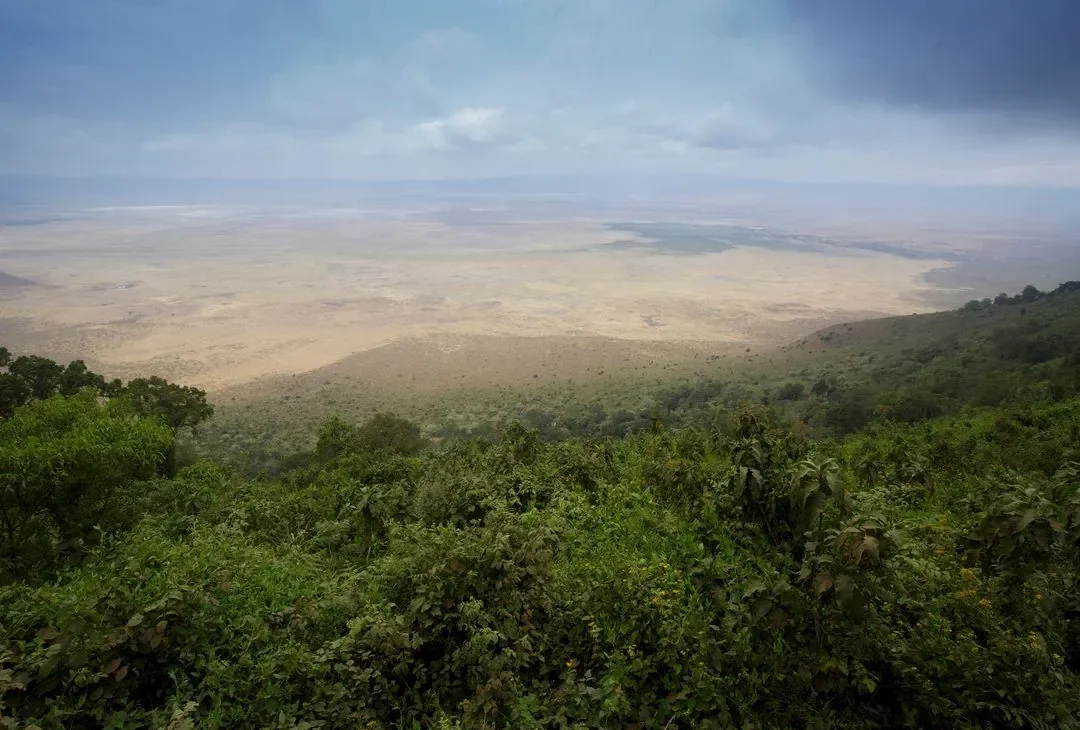
The rim sits at 2,280 metres. Descending to the crater floor for a game drive takes about forty-five minutes each way, on a switchback road, before the wildlife viewing even begins. Nights up there are genuinely cold, breath-fogging cold, closer to a mountain evening than a savannah one, with temperatures that can drop towards freezing. The lodges tend to be fixed and permanent, built more like hotels than camps, with solid walls between you and the cold.
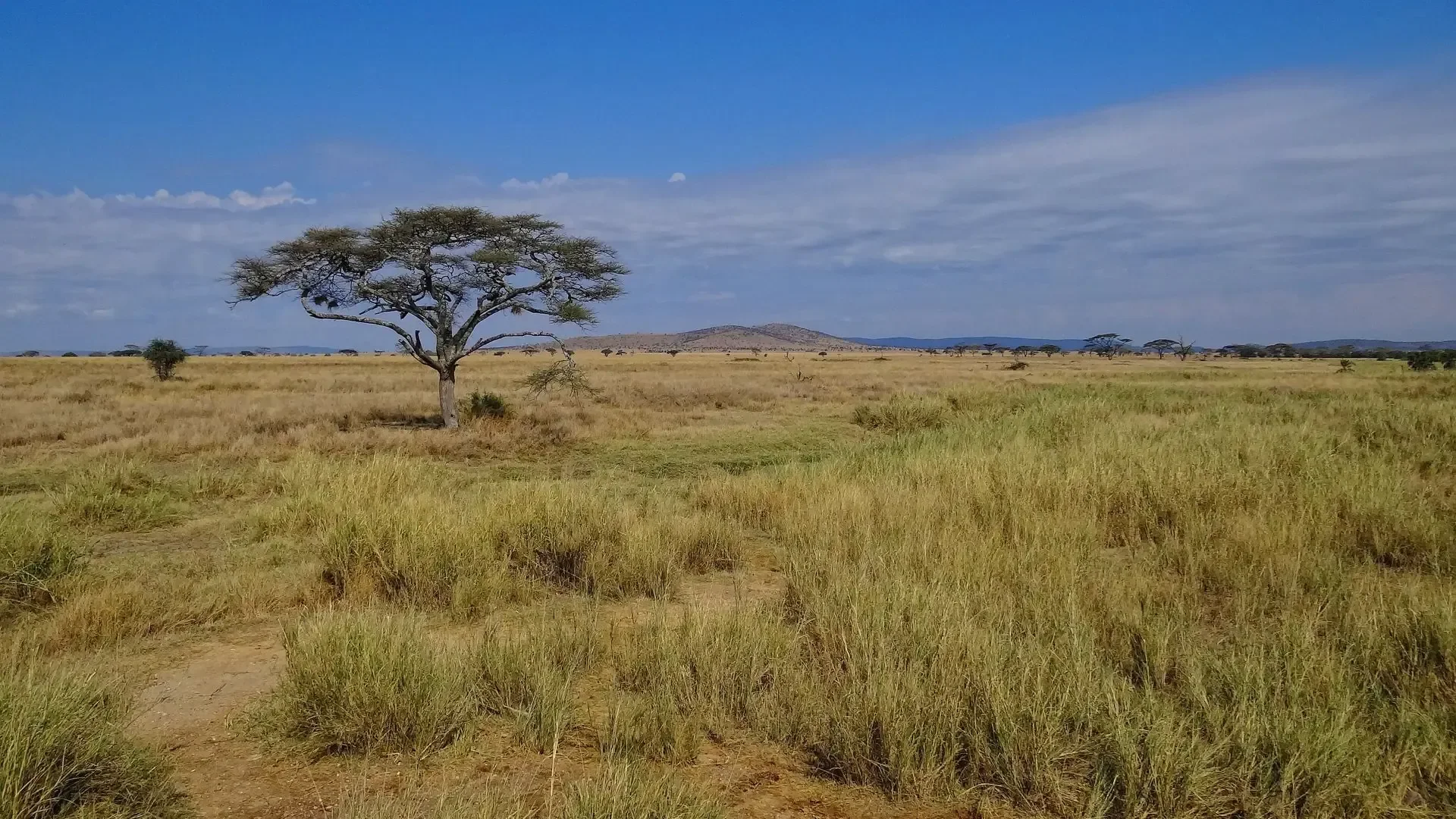
The southern Serengeti plains, where the wildebeest calve, sit lower and hold the day's warmth long into the evening, warm enough most nights that you can sit outside your tent with the lamp off rather than retreat behind glass. Camps out there are often seasonal, some of them mobile, repositioned through the year to stay close to the herds rather than fixed to one spot. For a January trip built around the calving season specifically, the plains camp earns its place over the crater rim. For a shorter add-on built around the crater's famously concentrated wildlife, the rim lodge earns its place instead. Neither is the wrong answer. They are answers to different questions.
'Neither is the wrong answer. They are answers to different questions.'
—
What January Buys You
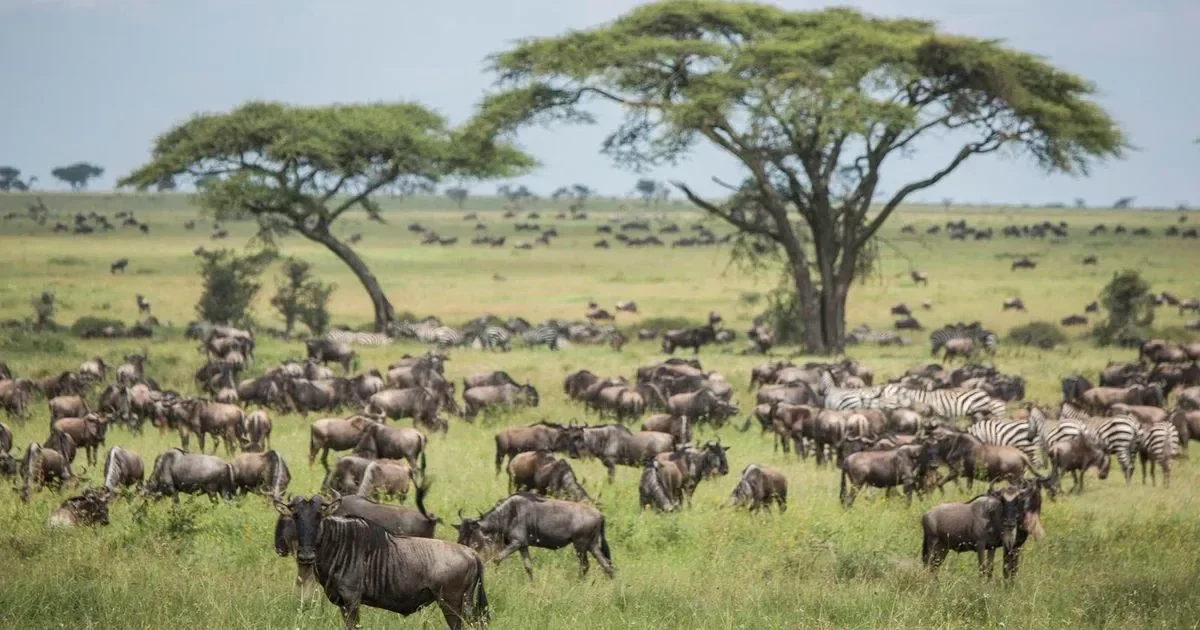
January sits between Tanzania's short rains and its long rains, so the plains you arrive on are still holding a startling green from the rain that has just left. It is also when the wildebeest begin to calve on the short-grass plains around Ndutu and the southern Serengeti, a season that builds through February as tens of thousands of calves are born within a few weeks of one another.
That timing is the reason this itinerary points south rather than north. A safari built for July, when the herds have long since moved on, would send you to an entirely different part of the park. January is not a generic "safari month." It is a specific one, and the specificity is the point.
'January is not a generic "safari month." It is a specific one, and the specificity is the point.'
—
The Coast, Timed On Purpose
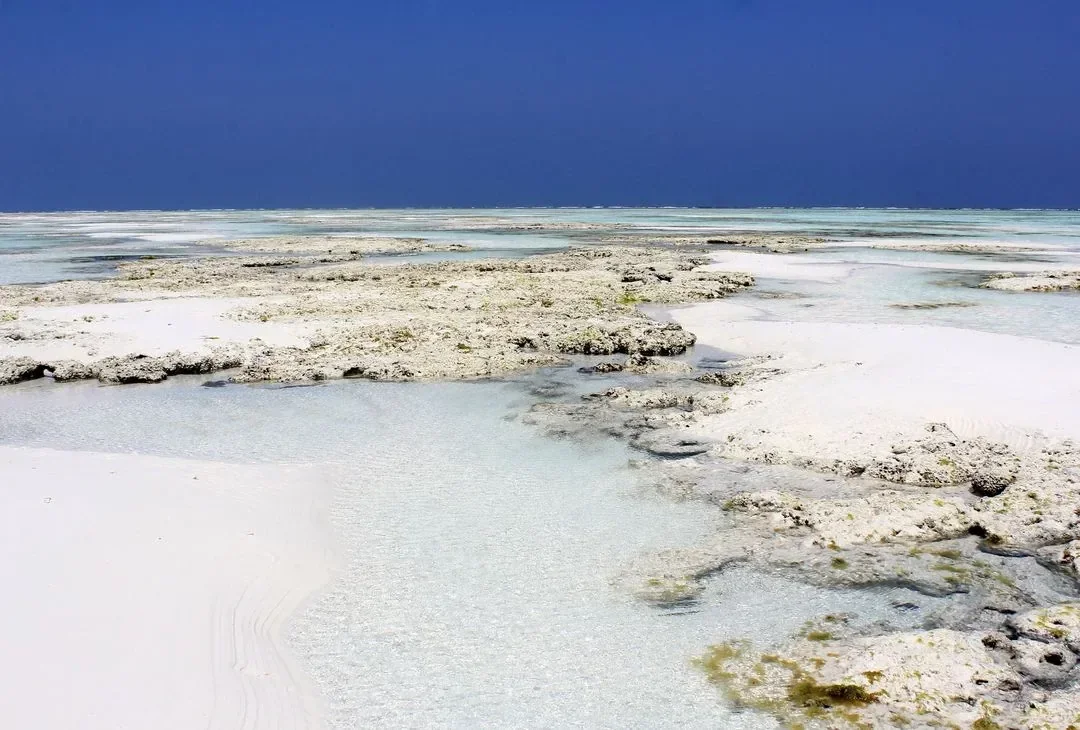
Step off the connecting flight in Zanzibar and you feel the change before you have found your bags, in the salt air and the warm sand and the sea lying flat with no wind on it. Zanzibar in January sits inside its own short dry season, carried by the Kaskazi, the north-easterly wind that settles the sea rather than stirring it. Air temperatures hold in the low thirties by day, the sea a few degrees short of bath-warm, and the calm water is what makes the month genuinely good for swimming and snorkelling, not only a warm one.
The crater rim is cold in the morning. The coast, one short flight away, never is. The itinerary was built to move through both registers on purpose, not to average them into a single generic "hot country in winter."
—
The Return, Considered
The same airline groups that connect London to Kilimanjaro also connect London to Zanzibar. That matters more than it sounds. It usually means the return can be routed out of Zanzibar directly, rather than backtracking north to the airport you flew into a week earlier to start the journey home.
That is exactly the detail that never shows up in a brochure and rarely gets asked about directly. It shows up when we sit down and work through the routing, leg by leg, before recommending anything to you.
That is the kind of thing we would rather work out long before you ever see an itinerary, whether your trip has one leg or four. So come and tell us what your January needs to feel like by the time you land, and we will work the legs out around it… fleece and reef-safe sunscreen in the same case, if that is where the reasoning takes you.
Come find us at No.82.
hello@agentnouveau.com