
The Road That Is the Holiday
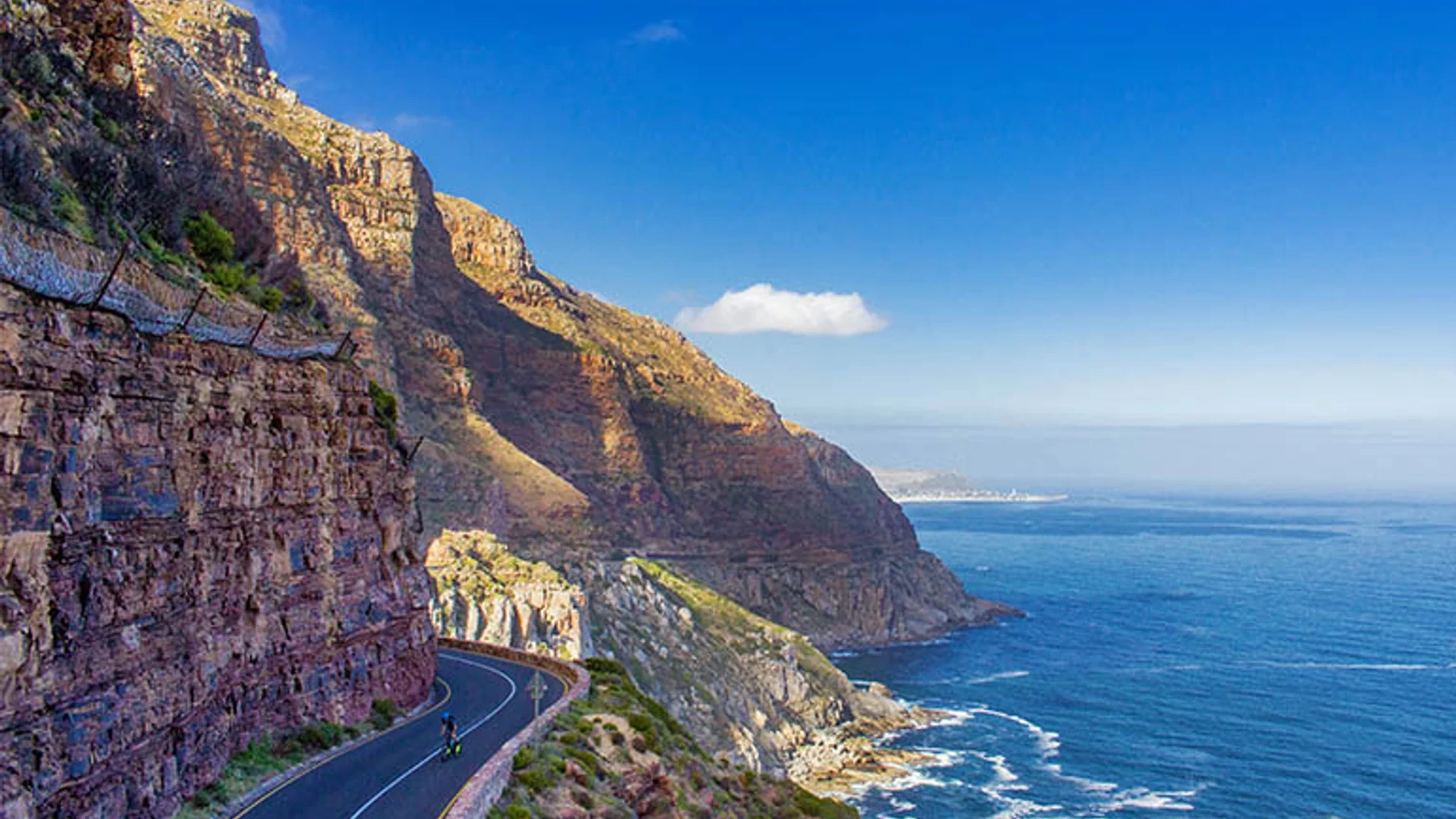
Knysna and Plettenberg Bay sit barely thirty kilometres apart. Half an hour of driving on a clear road, less than the time it takes to cross a city at rush hour, the two best-known towns on South Africa's Garden Route close enough to share a morning. Which is exactly the problem with how most people travel the route, and exactly the thing worth getting right.
The Garden Route is not a list of places. It is a road. A coastal thread running east along the southern edge of the country, the towns strung along it like beads, and the temptation is to treat it the way a brochure does, as a sequence of stops to collect before dark. We would make the case for the opposite. The drive is the holiday. The forest, the lagoons, the mountains leaning in on one side and the ocean opening out on the other... the road is not how you reach the experience. It is the experience.
—
Where the Name Comes From
The route earns its name honestly. It is called the Garden Route for the band of indigenous forest that lines the coast, a green so dense and so old it shades the road for long stretches, broken open at intervals by a lagoon or a river mouth or a sudden view of the sea. The land was named with the same care. The Outeniqua Mountains, which the road runs beneath for much of the way, take their name from a Khoekhoe word read as they who bear honey. Further east the forest gives way to the Tsitsikamma, the place of much water.
These are not decorative facts. They tell you what the place has always been about. Honey and water and forest. Things gathered slowly, things that keep their own time. The road simply follows the shape of all of it.
'The road is not how you reach the experience. It is the experience.'
—
The Stretch Between
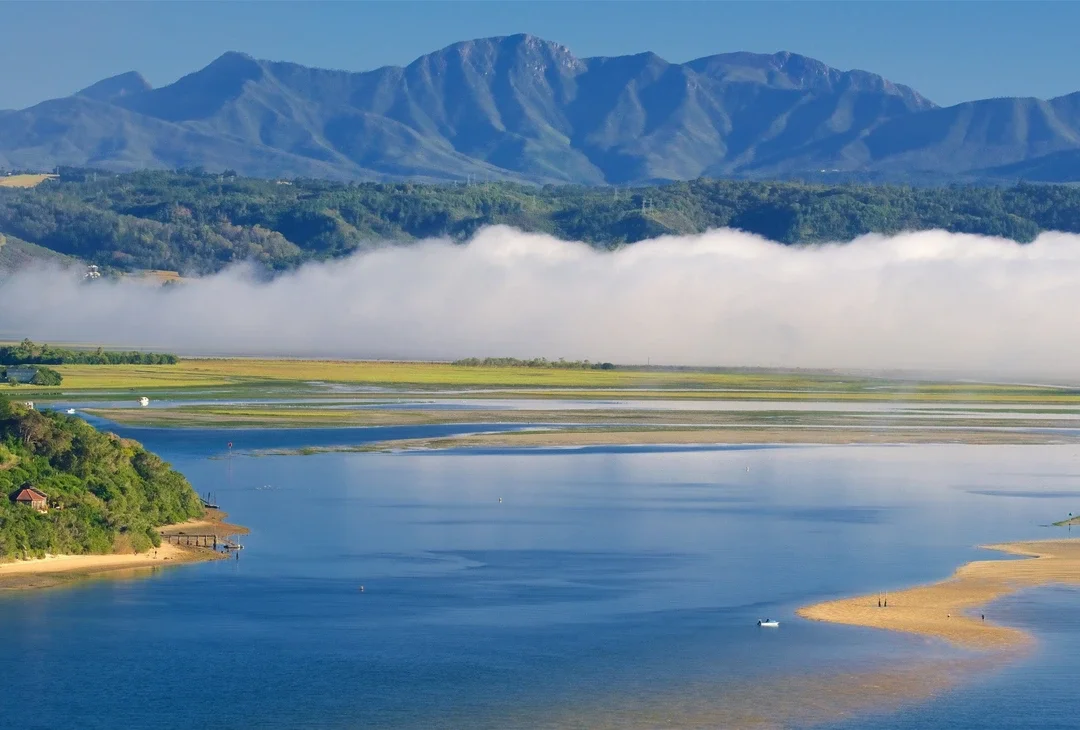
The best of it is the part with no name. Wilderness to Knysna is about forty-five kilometres, and the road for that stretch runs past a chain of lakes and lagoons so close to the verge you could almost reach the water. Then Knysna to Plettenberg Bay, thirty more, the forest thickening and thinning, the ocean appearing and slipping behind a rise and appearing again.
Driven in a hurry, it is forgettable. Driven slowly, with the windows down and nowhere to be by a fixed hour, it is the reason to come. You stop where there is no reason to stop, at a viewpoint nobody mentioned, at a farm stall, at a place where the road simply looks out over the water and you want to sit with it. The towns at either end are lovely. The road between them is the point.
This is the part that does not photograph. A drive cannot be reduced to an image the way a beach or a building can, and that is its quiet advantage. It asks to be travelled rather than seen.
—
Knysna and Its Lagoon
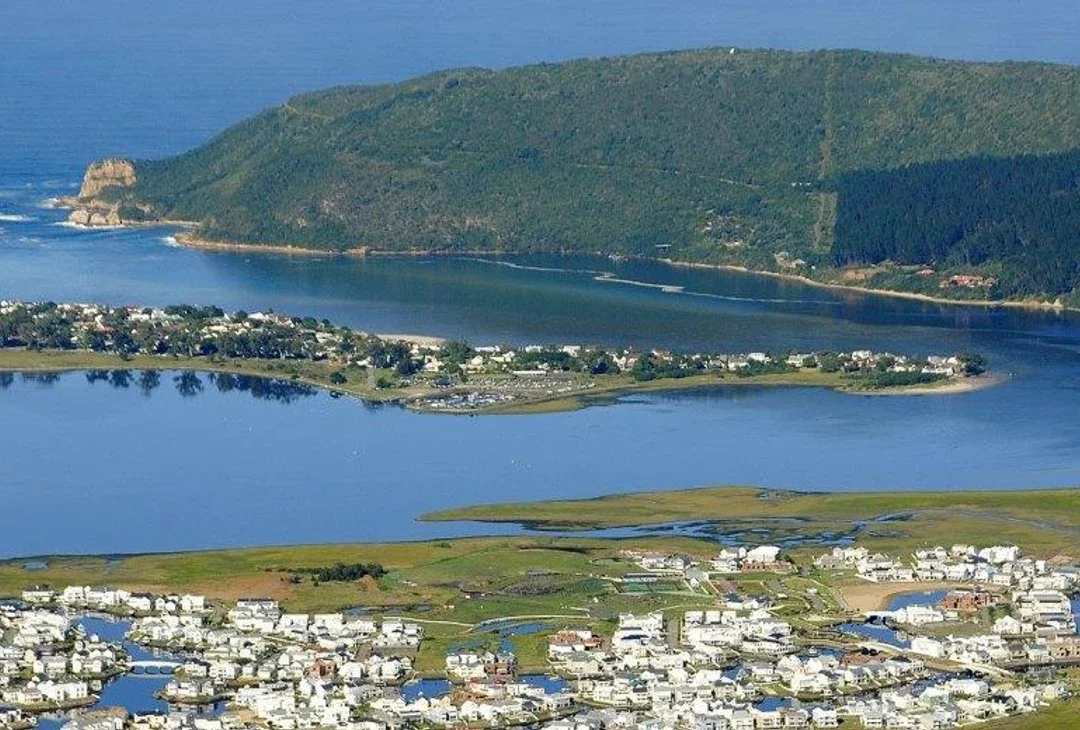
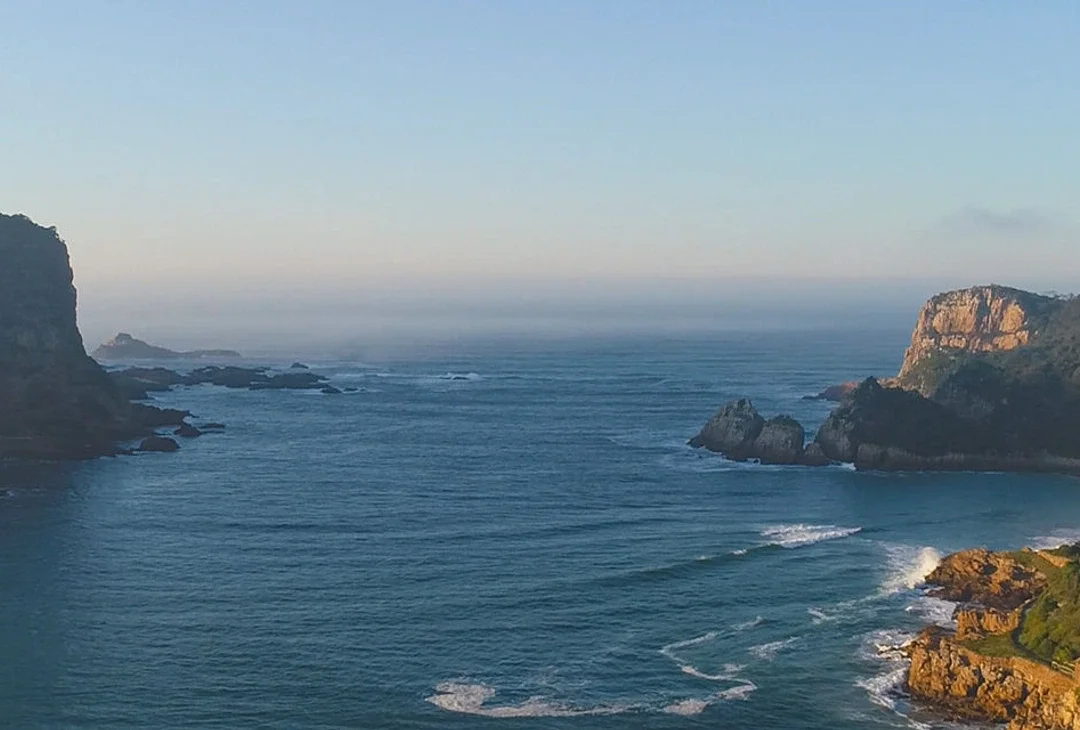
When the road does arrive somewhere, it tends to arrive somewhere worth slowing for. Knysna is built around water. Its lagoon is a tidal estuary of more than sixteen hundred hectares, a great soft sheet of it reaching inland from the sea, and twice a day the tide moves through and changes the whole character of the place. At its mouth stand the Heads, two sandstone cliffs about three hundred metres apart, framing the narrow channel where the lagoon meets the open ocean.
Stand at the Heads in the late afternoon and the argument for the whole region makes itself. The light comes in low off the water. The lagoon goes to glass. The forest behind softens. You understand, watching it, that nothing here is in a hurry, and that the only mistake you could make would be to be in one yourself.
'Nothing here is in a hurry. The only mistake you could make would be to be in one yourself.'
—
Plettenberg Bay and the Eastern End
Thirty kilometres on, Plettenberg Bay opens onto a long crescent of white sand with the mountains standing behind it. It is the more polished of the two towns, easy and bright, the kind of place where lunch drifts into the afternoon without anyone deciding it should. Beyond it the road carries on into the Tsitsikamma, into the deepest forest of the route and the rivers that gave the place its name, and most people turn back before they reach it.
There is no need to reach the end. The Garden Route is not a thing you complete. It is a road you give yourself to for a few days, at the pace the road sets, and the version that restores rather than depletes is always the slower one.
—
The Considered Way
The mistake is the schedule. Three towns in a day, a viewpoint each, a photograph at each, and a long drive after dark to make the next booking. The road punishes that approach by becoming invisible, just the dull bit between the parts that count.
Travelled the other way, with two or three nights in one place and the road itself treated as the day's plan, the whole thing changes. The mornings are slow. The drives are short and taken without urgency. The light arrives in the late afternoon, every day, and asks nothing of you but that you stop and watch it. You come home slower than you left. That is the version worth planning, and it is the version we plan.
Come find us at No.82.
hello@agentnouveau.com