
The Valleys That Run on Afternoons
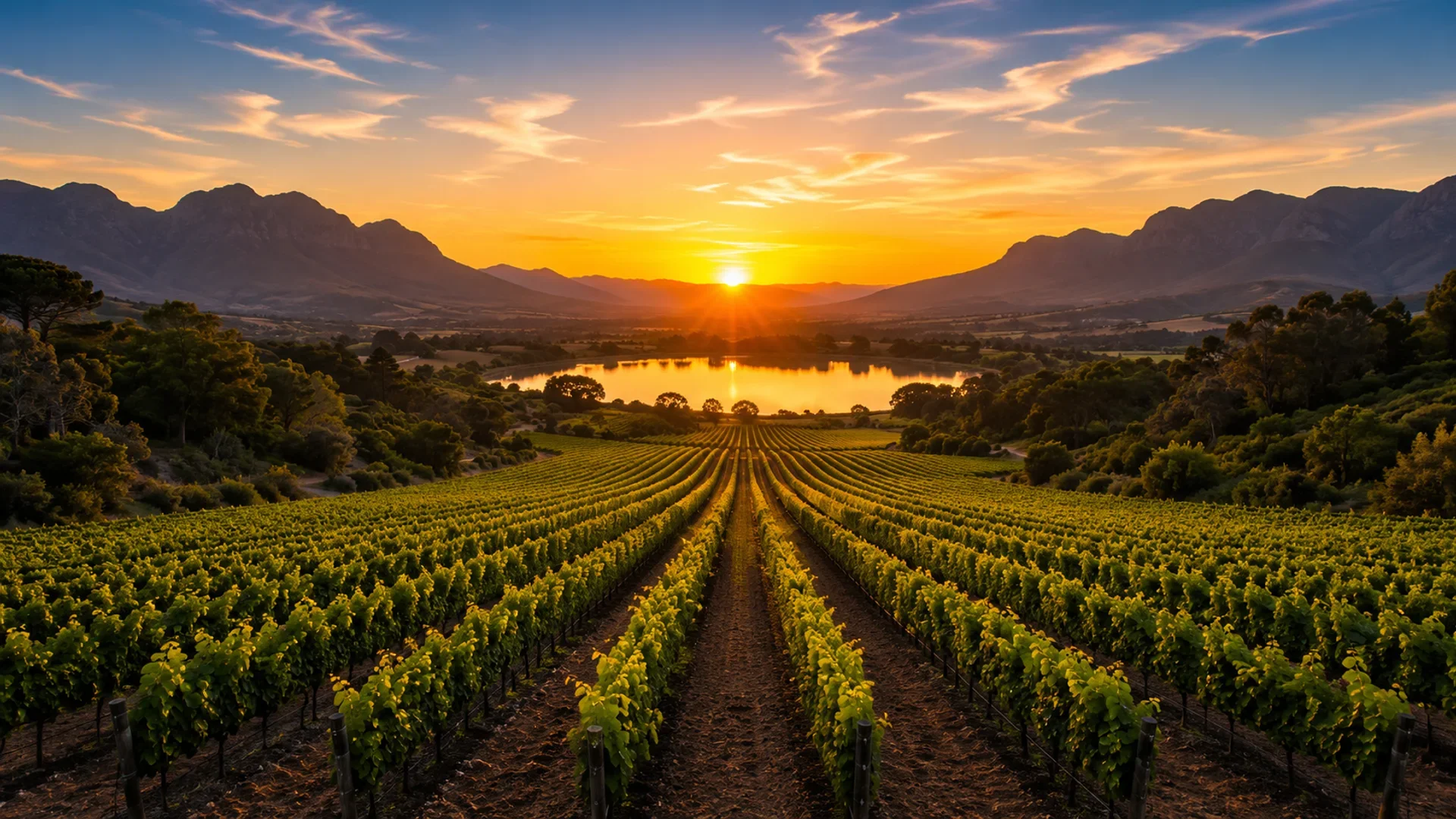
The first wine at the Cape was pressed in 1659. Three and a half centuries later, the vineyards that grew from that first harvest cover the valleys an hour east of Cape Town, gathered around the towns of Stellenbosch and Franschhoek. Places that old learn, eventually, how to be unhurried.
We keep sending people to the Winelands, and rarely for the reasons the brochures lead with. The cellars are excellent and the scores are high, and none of that is the point. The point is the afternoon. The way a table booked for one o'clock can still be going at five. The way the light comes down off the mountains in the last hours and settles the whole valley into a slower register. This is travel measured in hours given back, not sights collected.
—
The Drive In
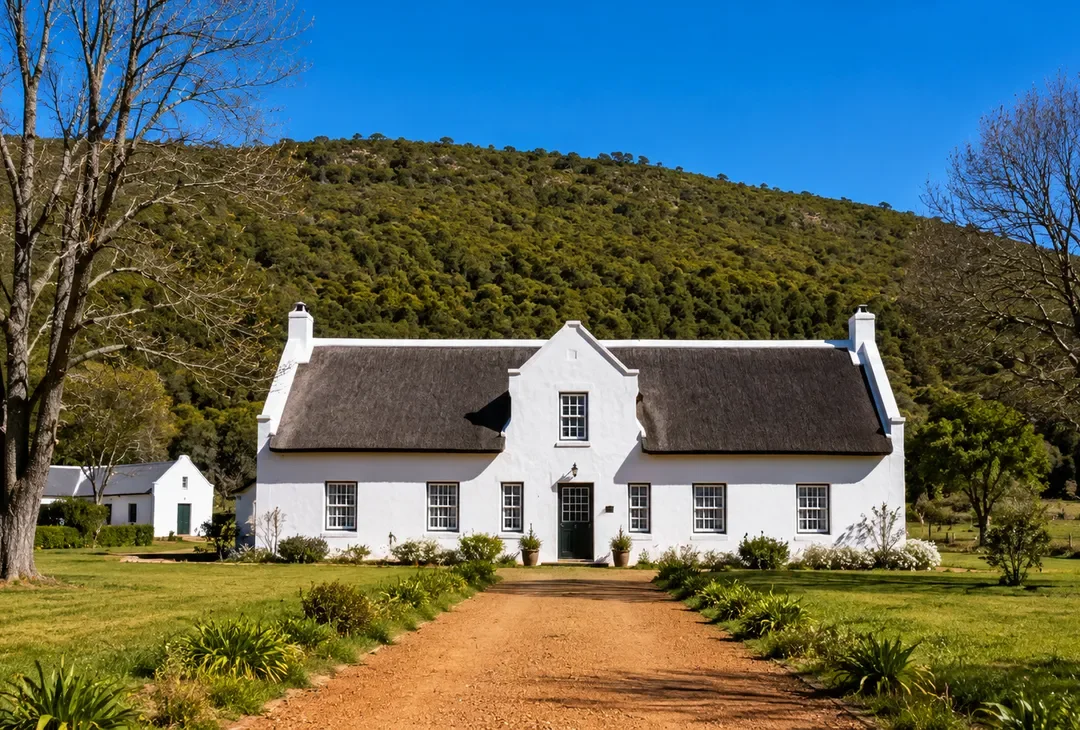
Stellenbosch wears its age in oak. They call it the Eikestad, the city of oaks, and the streets of the old town are lined with trees first planted to shade ox wagons. The white gabled facades behind them have stood since the Dutch laid the town out in the seventeenth century. It is a university town as well as a wine town, so there is a current of younger life running under the heritage, which keeps it from feeling like a museum.
You feel the change on the way in. The city falls away, the road narrows, and the mountains close on either side. The Helshoogte Pass lifts you over the ridge that separates the Stellenbosch and Franschhoek valleys, and from the top the land opens out below in long green rows. Within half an hour the register has changed completely. People drive more slowly here because there is no reason to drive quickly.
The towns reward walking once you arrive. Stellenbosch keeps its history in plain sight, in the gabled homesteads and the shaded squares. Franschhoek is smaller and quieter, a single long main street with the mountains standing at the end of it like a held breath. Neither asks much of you beyond your attention.
'Lunch here is not a meal you finish. It is an afternoon you enter.'
—
The Long Lunch
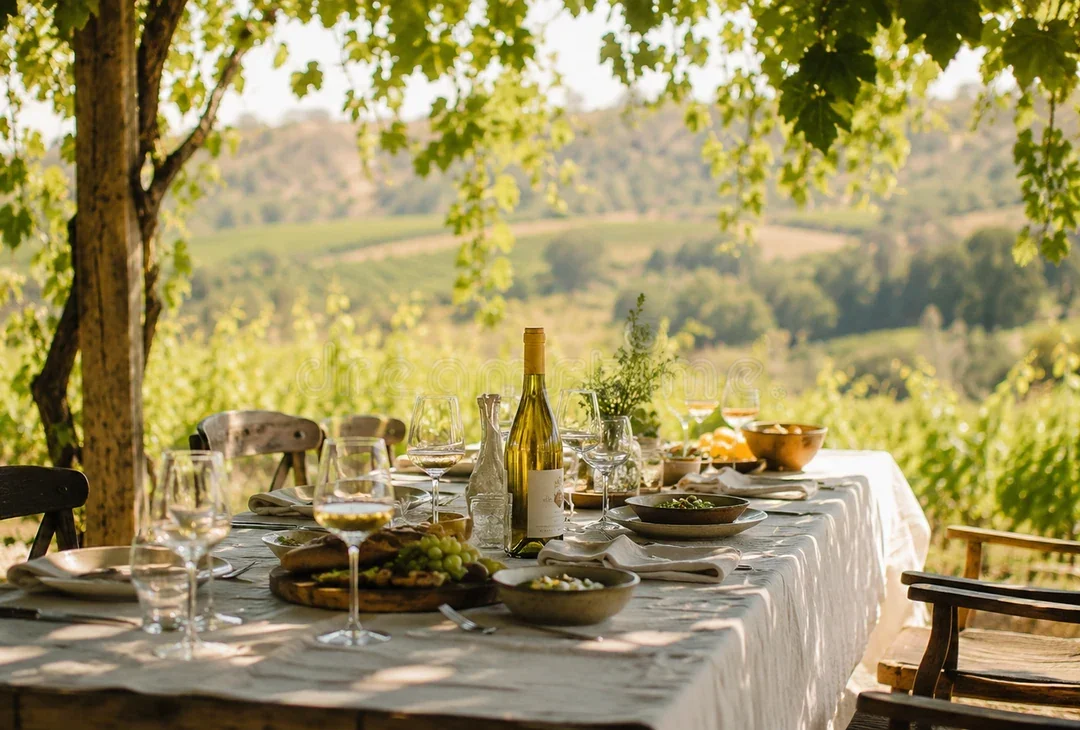
Franschhoek means French corner. The name is owed to the Huguenots who arrived in 1688 and brought vine cuttings, French surnames that still appear on the labels, and a way of eating that took its time. The valley has kept the habit. The long lunch is the regional art form, and it is taken seriously without ever being solemn. Lunch here is not a meal you finish. It is an afternoon you enter.
A good one starts late and refuses to hurry. A table under vines or on a shaded stoep, courses arriving when they are ready rather than when the kitchen wants the table back, a bottle from the estate you are sitting on, and a view that does most of the talking. The food has grown serious in recent years, the valley now as known for its kitchens as its cellars, but the spirit of it stays generous rather than precious.
By the time coffee comes the afternoon has gone, and that was always the plan. This is the thing the Winelands understand that faster places forget. A meal can be the destination. You do not need to do anything afterwards. The lunch was the thing.
—
The Light
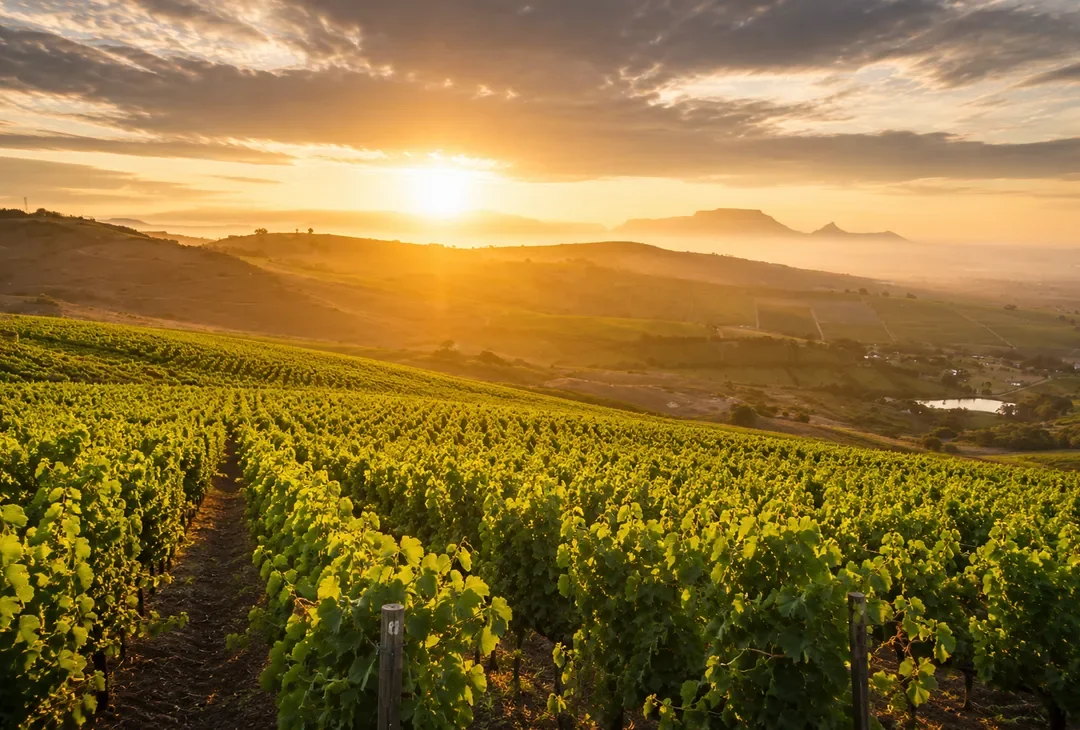
The Cape light in the late afternoon is its own reason to come. The sun drops behind the mountains and the valley holds the glow for an hour, warm and low and forgiving. The vines turn gold at the edges. The whitewashed gables soften. Even the gravel looks considered.
The light does not flatter the valley so much as slow it. People stop talking for a moment when it arrives. Glasses are refilled without anyone deciding to. It is the part of the day photographs reach for and never hold, which is the best argument we know for being there in person.
'The light does not flatter the valley so much as slow it.'
—
When to Come
The valley keeps a slower clock all year, but it changes its dress. Harvest runs from February into April, the busiest and most alive the estates ever feel, the cellars working late and the air heavy with fruit. The light we keep describing belongs to autumn, from April into May, when the vines turn copper and gold and the heat softens into something kinder. Winter, from June, brings green hills, low cloud on the peaks, and long lunches moved indoors beside a fire, which has its own quiet appeal. Summer is hot, bright and busy.
There is no wrong season here, only different ones. If the point is the afternoon and the light, autumn makes the strongest case, with the added grace of falling outside the European summer, when the valley is quieter and a good table is easier to come by.
'There is no wrong season here, only different ones.'
—
The Considered Way
The mistake most people make is staying in Cape Town and driving out for the day. An hour each way, a designated driver who cannot taste anything, and a clock running the whole time. The Winelands reward the opposite approach. Stay in the valley. Give it days rather than hours. Let the afternoons run their natural length without a drive home hanging over them.
Travelled this way, the region restores rather than depletes. The mornings are slow, the lunches are long, the light arrives on schedule, and nothing on the itinerary argues with any of it. You come back to the city, or home, slower than you left. That is the version worth planning, and it is the version we plan.
Come find us at No.82.
hello@agentnouveau.com