
The Cruise That Doesn't Feel Like One
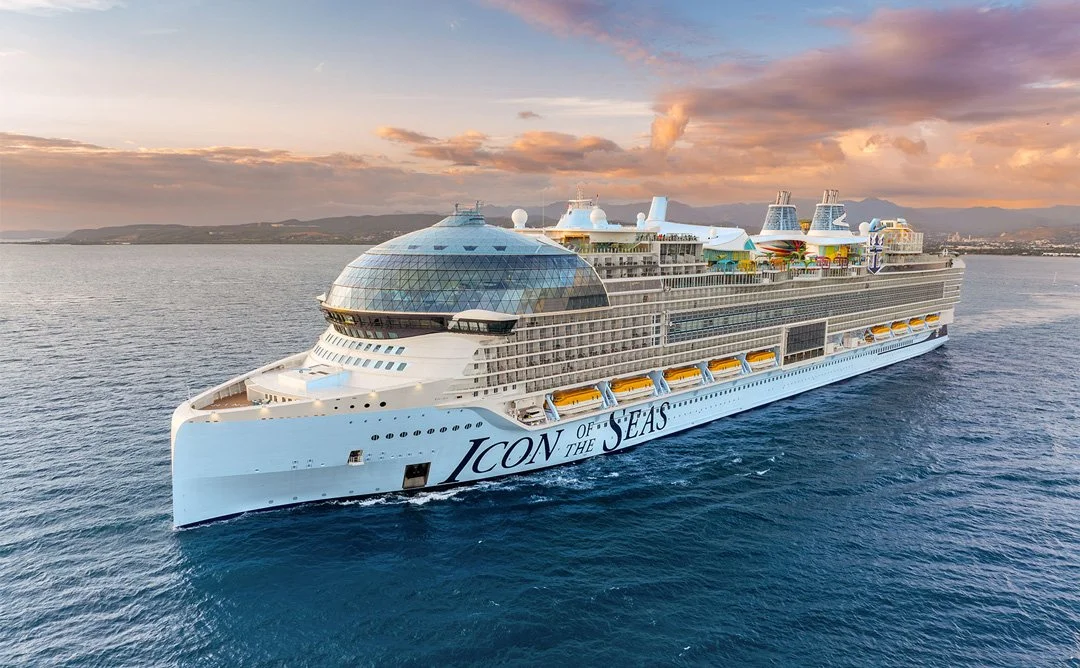
Icon of the Seas displaces more water than any passenger vessel ever built. She was constructed at the Meyer Turku shipyard in southwest Finland, entered service in January 2024, and now spends most of her year tracing a loop through the Eastern and Western Caribbean. She is, by some distance, the largest cruise ship in operation. She does not feel like a ship.
We have been thinking about this in the context of how cruising has changed, and how slowly the conversation around it has changed alongside. The product has outpaced its own reputation. The ships look nothing like they did. The itineraries look nothing like they did. The guests look nothing like they did. The trade conversation, in many quarters, still sounds like 2010.
On Monday 19 May we are hosting Molly from Royal Caribbean at No.82 for an afternoon tea. A Caribbean-style menu from our chef, three hours of supplier conversation, and the kind of access to a brand that does not usually happen outside a trade show stand or a ship inspection.
— Fifty-three years at sea —
Royal Caribbean was founded in 1968 and ran its first cruise in 1970. The first ship was the Song of Norway, built in Helsinki, capable of carrying just over seven hundred passengers. The Caribbean was the brief from the beginning. Island-hopping routes built around itinerary variety rather than destination duration. That model has been refined for over five decades and remains the heart of the line.
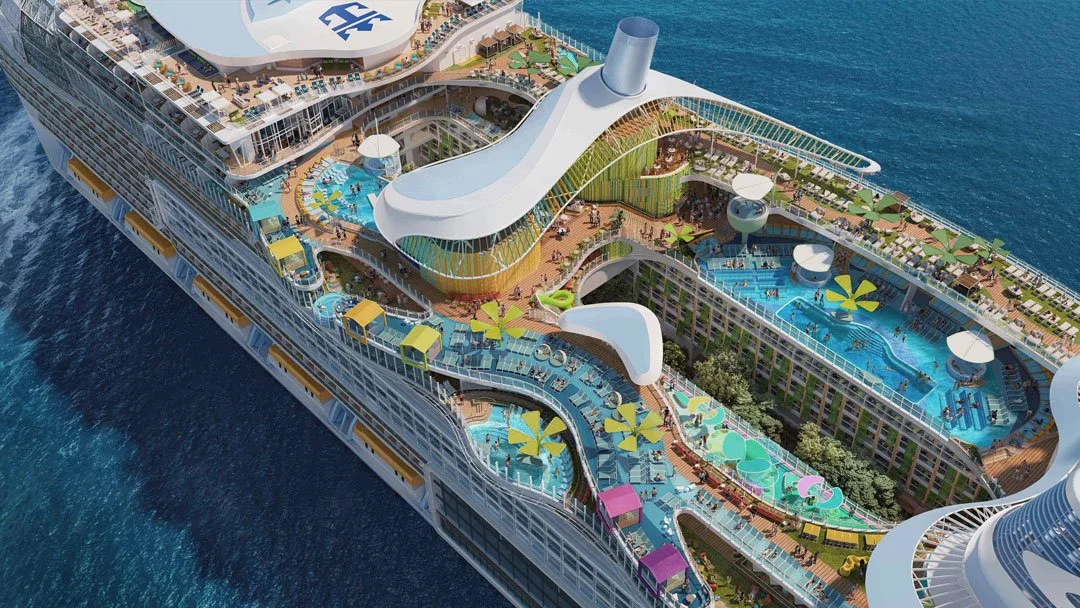
What has changed is the ship. Royal Caribbean's vessels have grown progressively less ship-like and progressively more destination-like. Interior parks. Promenade boulevards. Open-air aquaparks. Dining rooms that operate as standalone restaurants. The marketing language has not caught up with the product, and the product has been pulling further ahead each year.
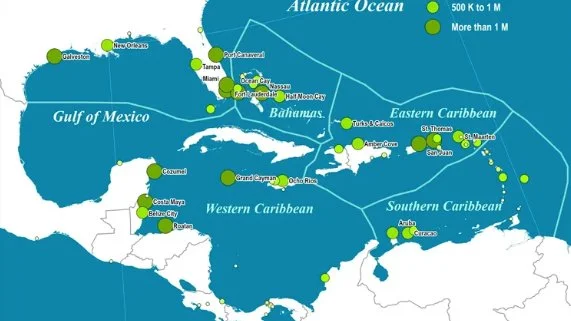
The Caribbean itineraries remain the spine. Seven-night routes drift between the turquoise shallows of the Bahamas, the volcanic drama of St Kitts, the reef-fringed coasts of Cozumel, and the quiet bays of St Lucia. Some itineraries call at private destinations that Royal Caribbean has developed and runs directly. Others follow the older, looser pattern of port-to-port. The point is choice. The point has always been choice.
— The European programme —
The European routes are the quieter story, and the more interesting one for the clients we typically speak to. Royal Caribbean's European programme runs across the Mediterranean, the Norwegian fjords, the British Isles, and the Canary Islands. The itineraries treat cruise as transit infrastructure for someone who wants to wake up somewhere new each morning without unpacking twice. The proposition reads differently from the Caribbean. It reads less like a sea-based holiday and more like a multi-stop European tour, conducted by ship.
For first-time cruisers, the European programme is often the easier conversation. Familiar geography. Shorter flights. Itineraries that read like a holiday in their own right, rather than a holiday-from-the-ship. It is the route by which a particular kind of client steps into the category for the first time.
'The product has outpaced its own reputation. The ships look nothing like they did. The itineraries look nothing like they did. The guests look nothing like they did.'
— The afternoon at No.82 —
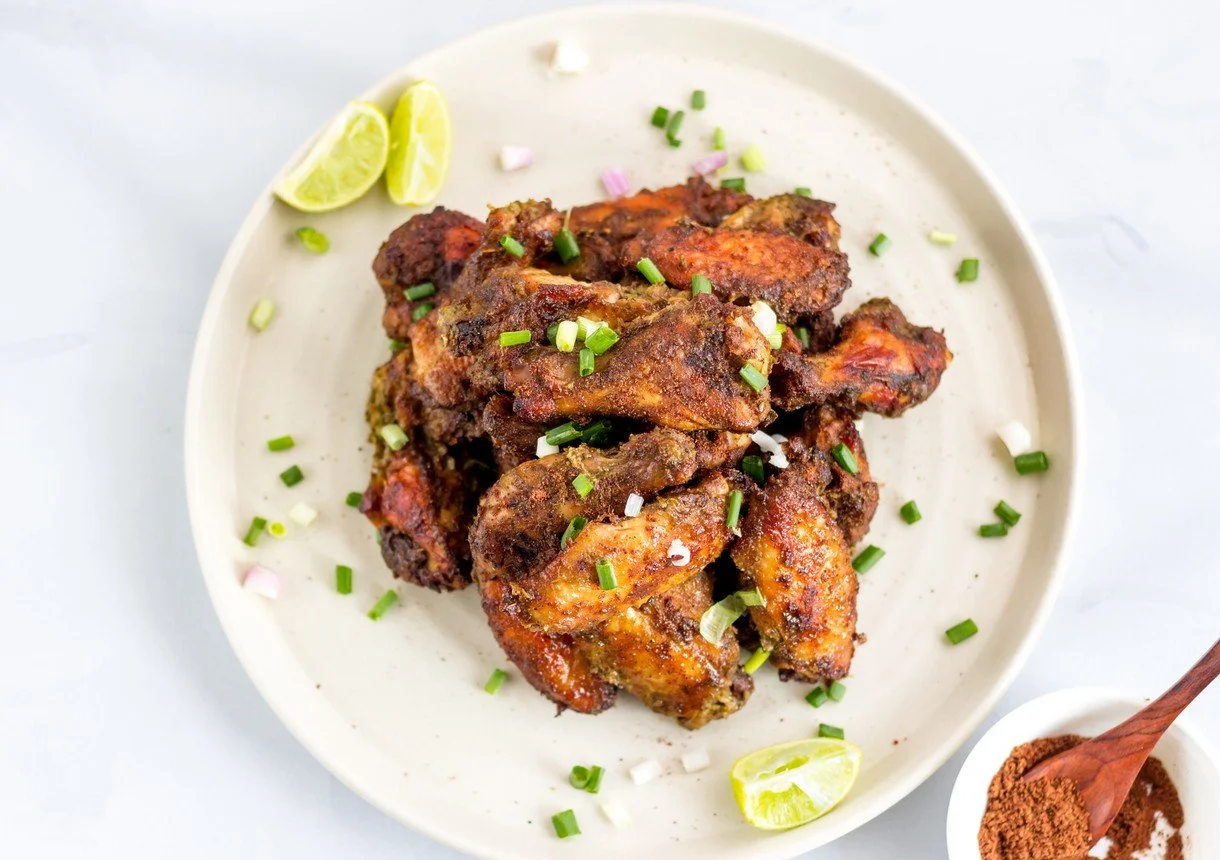
Our Caribbean chef has built a menu that mirrors the geography of the line. Curried goat cups. Saltfish fritters. Cinnamon plantain cups. Jerk wings. A Signature Rum Punch Tea, with the prosecco running unlimited through the afternoon. The pairing is geographical as much as gastronomic. The curried goat is St Lucia and Jamaica, the saltfish is Bahamian, the plantain is Cuban and Puerto Rican, the jerk is Jamaican, the Rum Punch is the through-line.
Molly will be in the room for the full three hours. The format is deliberately unstructured. There is no presentation. There is no slide deck. There is no fifteen-minute hard pitch. Guests can ask anything across the afternoon. Itineraries, ships, families, accessibility, the loyalty programme, the new European routes, what dinner is actually like on Icon of the Seas. Molly will sit down and walk through it. This is not a presentation. It is access.
— What the afternoon is for —
Cruising is a daytime conversation. People plan their cruise in daylight, with someone who has been there, over a long table and a glass of something cold. The afternoon-tea format suits the supplier and suits the proposition. Twelve seats. Three hours. A Caribbean menu and a conversation that takes the time it needs to take.
For us, this is the third event in the Agent Nouveau hospitality programme and the first built around a cruise partner. The supper clubs were dinner-led. This one is daylight-led. The intent is the same. Real time with the people who shape the product, real food on the table, real conversation about how a client should actually be travelling.
If you would like to sit at the table on Monday 19 May, drop us a line at the address below. Twelve seats. £37 per guest. By invitation.
Come find us at No.82.
hello@agentnouveau.com