
The Table You Reach by Boat
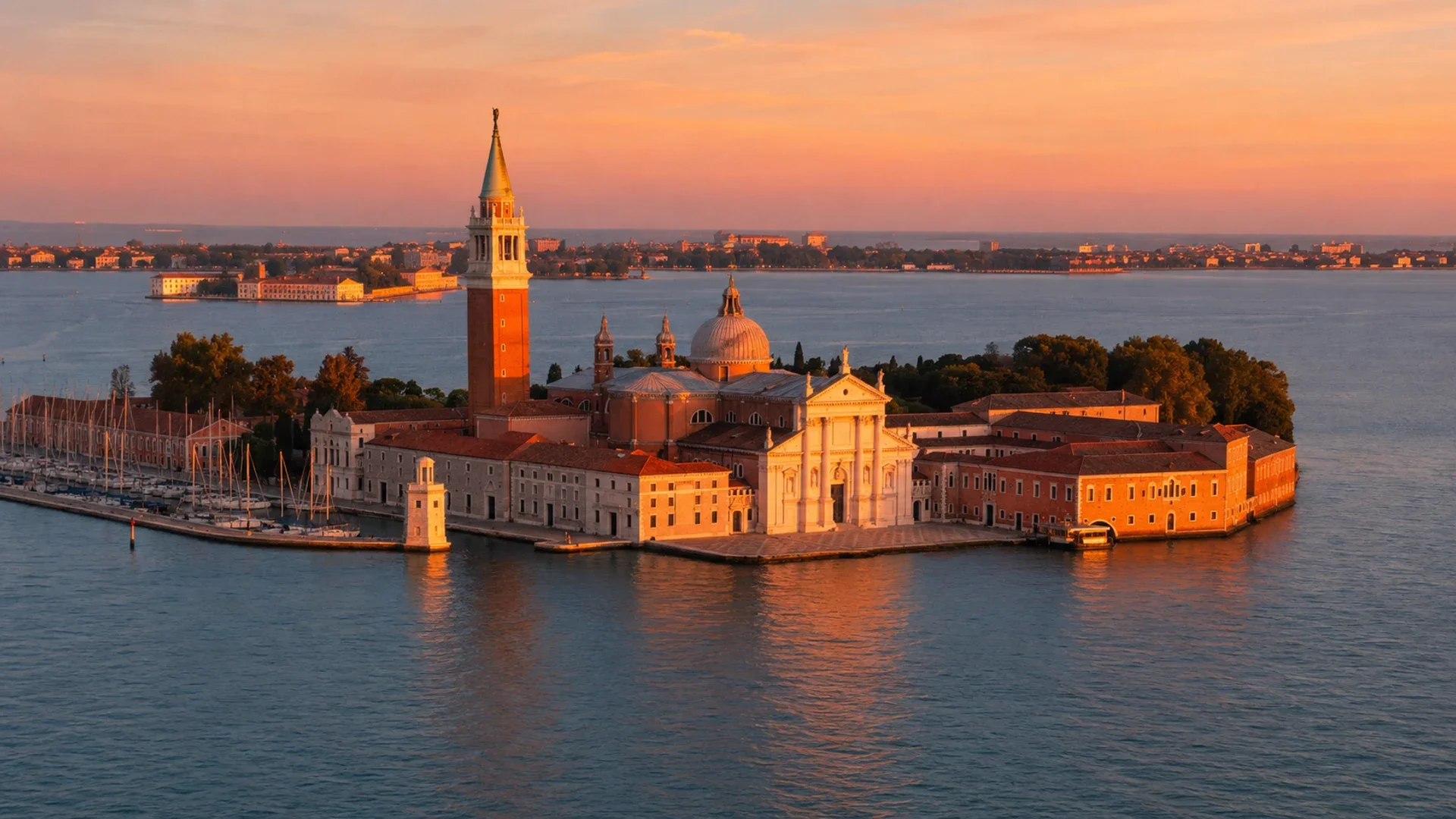
Oro can only be reached by water. The restaurant sits inside the Belmond Hotel Cipriani, at the tip of Giudecca, the long quiet island that lies across a stretch of lagoon from St Mark's. There is no bridge to it. You come by boat, and you are met by one.
We think the crossing is the part most people undervalue. The hotel runs a small launch back and forth to the steps beside St Mark's Square, day and night, and the water between the two shores takes only a few minutes. Those minutes do something. The noise of the city loosens its hold, the famous skyline rearranges itself into the right distance, and by the time the boat noses into the Cipriani's dock you have already left one Venice for another. The meal has started before the menu arrives.
—
The Island Across the Water
Giudecca is the Venice that the day-trippers rarely find. No grand sights pull crowds across the canal, so the island keeps a domestic rhythm the rest of the city lost long ago. Washing lines, kitchen gardens, boatyards, the occasional church by Palladio standing quietly among the ordinary streets.
The Cipriani opened here in 1958. Giuseppe Cipriani, the man behind Harry's Bar and the Bellini, wanted a retreat with its back to the crush and its face to the lagoon, and he found it on a two-hectare plot at the island's eastern tip. The hotel has kept that orientation ever since. It looks across the water at the city rather than sitting inside it, which turns out to be the more flattering angle. From this side the skyline reads like a Canaletto, held at a remove, complete.
That distance is the point of the place, and it is the point of dinner there too.
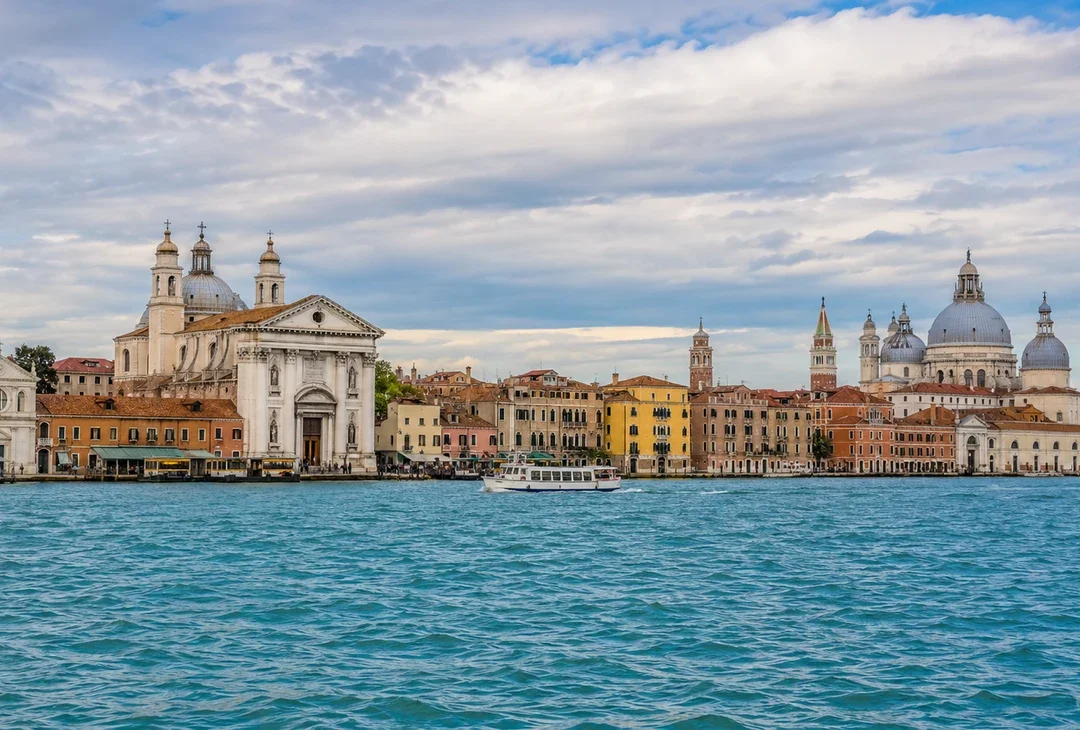
'The meal has started before the menu arrives.'
—
A Room Called Gold
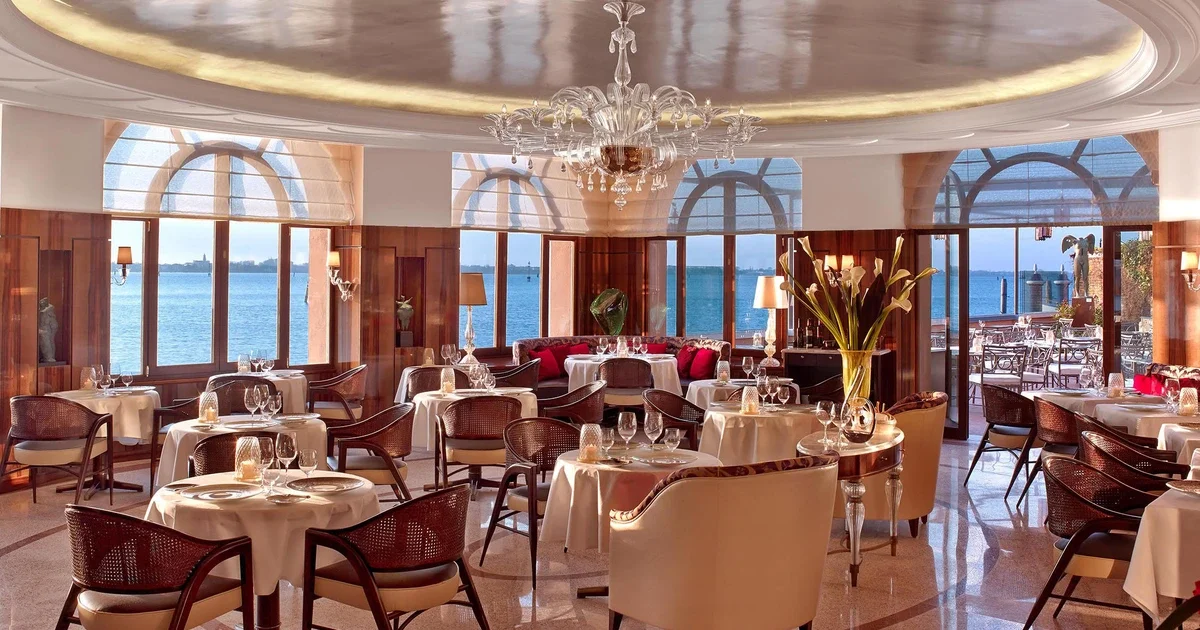
Oro means gold, and the room earns the name. It sits beneath a domed ceiling worked in gold leaf, lit by a handmade Murano-glass chandelier, the whole space turned by the designer Adam Tihany into something that glows rather than glitters. The light is warm, low and forgiving, the kind that makes everyone at the table look like the best version of themselves.
It would be easy for a room like this to overplay its hand. It does not. The gold is the ceiling's business, not the table's. At eye level the setting is calm, the linen plain, the windows giving onto the water and the lights of the city beyond. You are aware of the grandeur above you and the lagoon outside, and between the two there is just dinner, which is as it should be.
—
The Larder Is the Island
What lifts Oro out of the ordinary run of hotel dining rooms is where the food comes from. Much of it grows a few steps away. The hotel keeps its own gardens on Giudecca, organic plots that send salad leaves, herbs and edible flowers up to the kitchens through the day, picked rather than ordered. There are vines too, and the estate presses its own small vintage from them.
The rest comes from the lagoon at the door. Venice has always eaten from its own water, and the kitchen leans into that, taking moeche, the fleeting soft-shell crabs of the lagoon, and the seasonal fish that the city has cooked for centuries. The cooking does not have to travel far to be honest. It mostly just has to look down.
'Venice has always eaten from its own water, and the kitchen leans into that.'
—
The People Behind the Plate
Oro opened in 2014 and won its Michelin star not long after. The kitchen today is led by Vania Ghedini, who took it on for the 2024 season after five years in Marrakesh, cooking with the Alajmo brothers at their restaurant Sesamo. She brought back a cook's habit of borrowing quietly from everywhere she has worked, then setting it down inside the cuisine of the lagoon.
Working alongside her as Culinary Creative Director is Massimo Bottura, one of the most recognised chefs in Italy. The partnership has kept Oro's menus rooted in what the gardens and the lagoon give, season by season, while leaving room for a lighter, well-travelled hand. The food is serious without being austere. It tastes of where it is.
—
Worth the Crossing
A table at Oro is a small expedition, and that is most of its charm. You cannot drift in off the street. You decide to go, you take the boat, you cross the water, and you arrive somewhere that has chosen calm on your behalf. By the time the city lights come on across the lagoon, the rest of Venice feels pleasantly far away.
It is the sort of evening worth planning ahead for, and the sort we like to plan. A table here, and the crossing that comes with it, is the kind of detail that makes the difference between seeing Venice and sitting down in it.
Come find us at No.82.
hello@agentnouveau.com