
The Island Where Four Continents Sit Down to Eat
—
There is a dish in Mauritius called rougaille. It starts, as most good dishes do, with tomatoes, garlic, and time. A slow simmer. Thyme from the garden. Chilli that builds gently rather than arriving all at once. It is Creole in origin, French in technique, and entirely Mauritian in spirit.
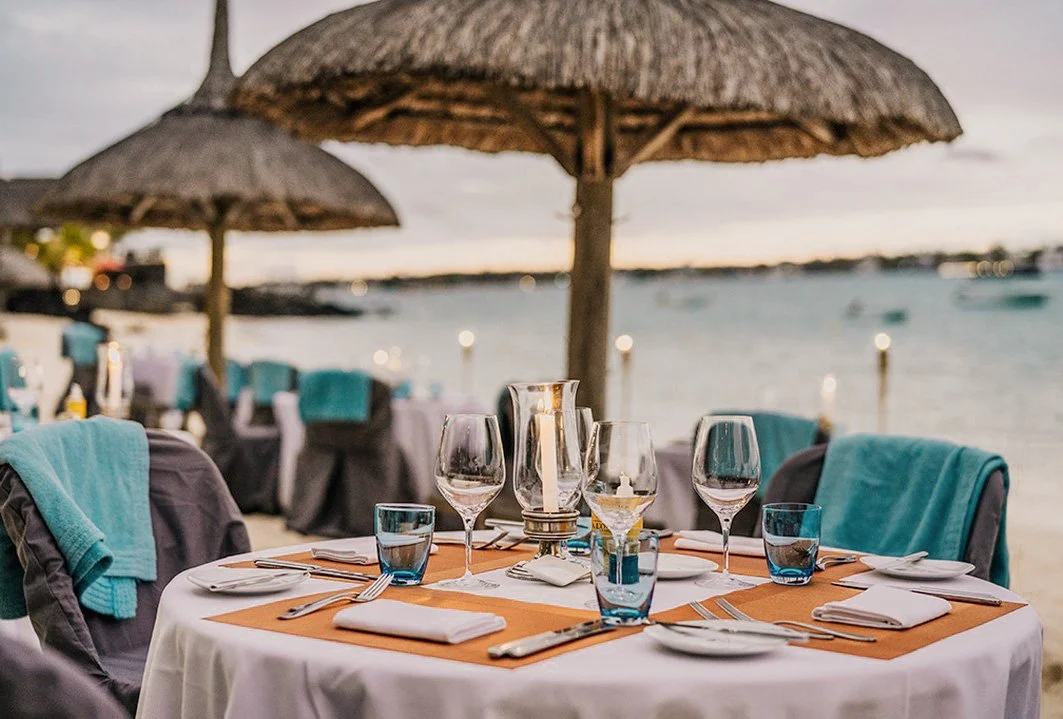
You could eat rougaille in a beachside restaurant with your feet in the sand. You could eat it at a street stall in Port Louis, served on a paper plate beside a stack of warm farata bread. You could eat it in someone’s kitchen, which is where it tastes best, because Mauritian food has always been about the table as much as the plate.
This is an island where four continents learned to cook together. Creole rougaille sits beside Indian biryani. Chinese boulettes float in fragrant broth next to French-inspired tarts dusted with icing sugar. Dholl puri, the soft flatbread stuffed with spiced yellow split peas, is sold from roadside carts and eaten with bare hands and no hesitation. Nothing is precious. Everything is generous.
And that generosity is what stays with you.
—
Where the Indian Ocean Meets Le Morne
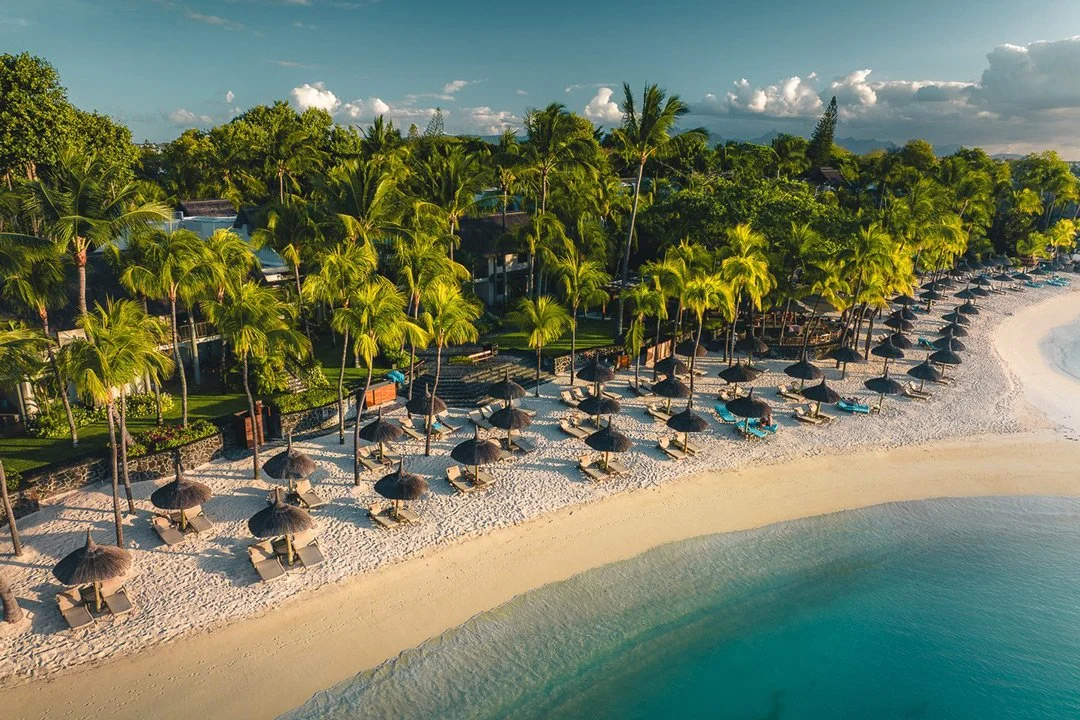
Mauritius is small. You can drive the length of it in a couple of hours. But it holds more landscape, more texture, more contrast than islands ten times its size. On the southwest coast, Le Morne Brabant rises from the peninsula like something out of a painting. A UNESCO World Heritage Site, its cliffs once sheltered escaped slaves who chose freedom over captivity. Today, it watches over some of the most beautiful coastline in the Indian Ocean, where the reef breaks turquoise against white sand and the light shifts from gold to rose as the afternoon turns.
The north is different again. Warmer, livelier, with the sheltered lagoons of Grand Baie and the capital Port Louis, where the Central Market smells of cinnamon and dried chilli and the sound of Kreol fills every corridor.
Between the two, the highlands. Tea plantations. Colonial-era sugar estates. Botanical gardens older than most European cities. Waterfalls that appear without warning in the middle of dense, green forest.
It is not one place. It is many, held together by warmth.
'Mauritius has always been a destination that rewards conversation. The food tells you about the culture. The culture tells you about the people'
—
Beachcomber: The Name Behind the Island
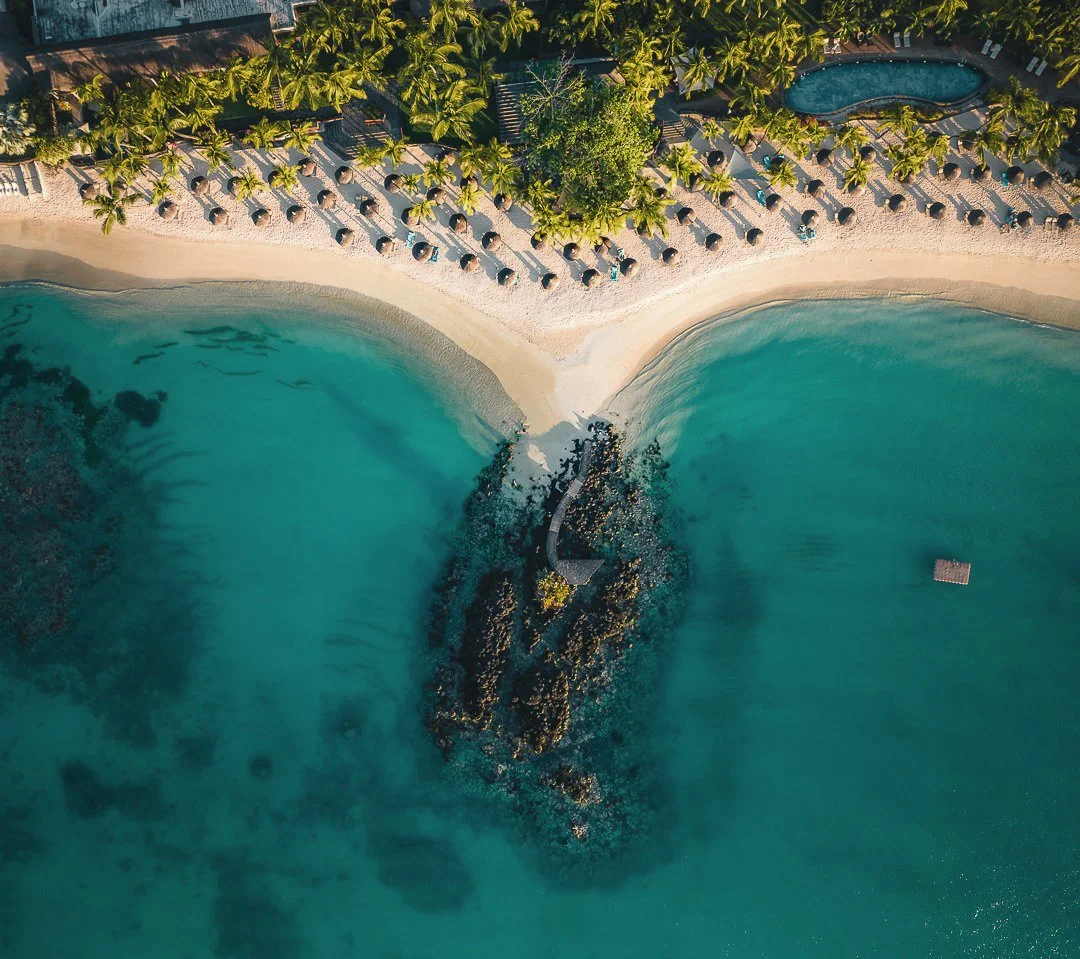
If you know Mauritius, you know Beachcomber. They have been here since 1952, longer than most of the island’s modern tourism infrastructure has existed. Eight resorts, each one different in character, all of them occupying beachfront positions that would be impossible to replicate today.
Royal Palm, on the sheltered northwest coast, is the flagship. Staff outnumber guests three to one. The suites face the ocean. The service is the kind that anticipates rather than reacts, and the reputation is one that has been built over decades, not marketing cycles.
Dinarobin, beneath Le Morne, is quieter. An all-suite resort set into tropical gardens with cascading pools, wooden decks, and a spa that makes you forget what day it is. It is elegant without being formal, and the views from the terrace are ones you photograph badly because no camera can hold that much blue.
Trou aux Biches, on the northwest coast, was the first eco-friendly resort in Mauritius. Seventeen spa cabins. A strip of white sand that runs unbroken for over a kilometre. Private villas tucked into palm groves. It is where couples go to disappear for a week, and where families return to year after year.
Paradis sits on the same Le Morne peninsula as Dinarobin, but with a completely different energy. Open, expansive, with the island’s largest lagoon stretching out in front of it. Golf, water sports, beach villas. It is the Beachcomber resort where children run barefoot on the sand while their parents read novels they never finish.
Each property has its own story. None of them feel like a chain.
—
A Supper Club in Westbourne
On Thursday 16th April, we are bringing a taste of Mauritius to No.82.
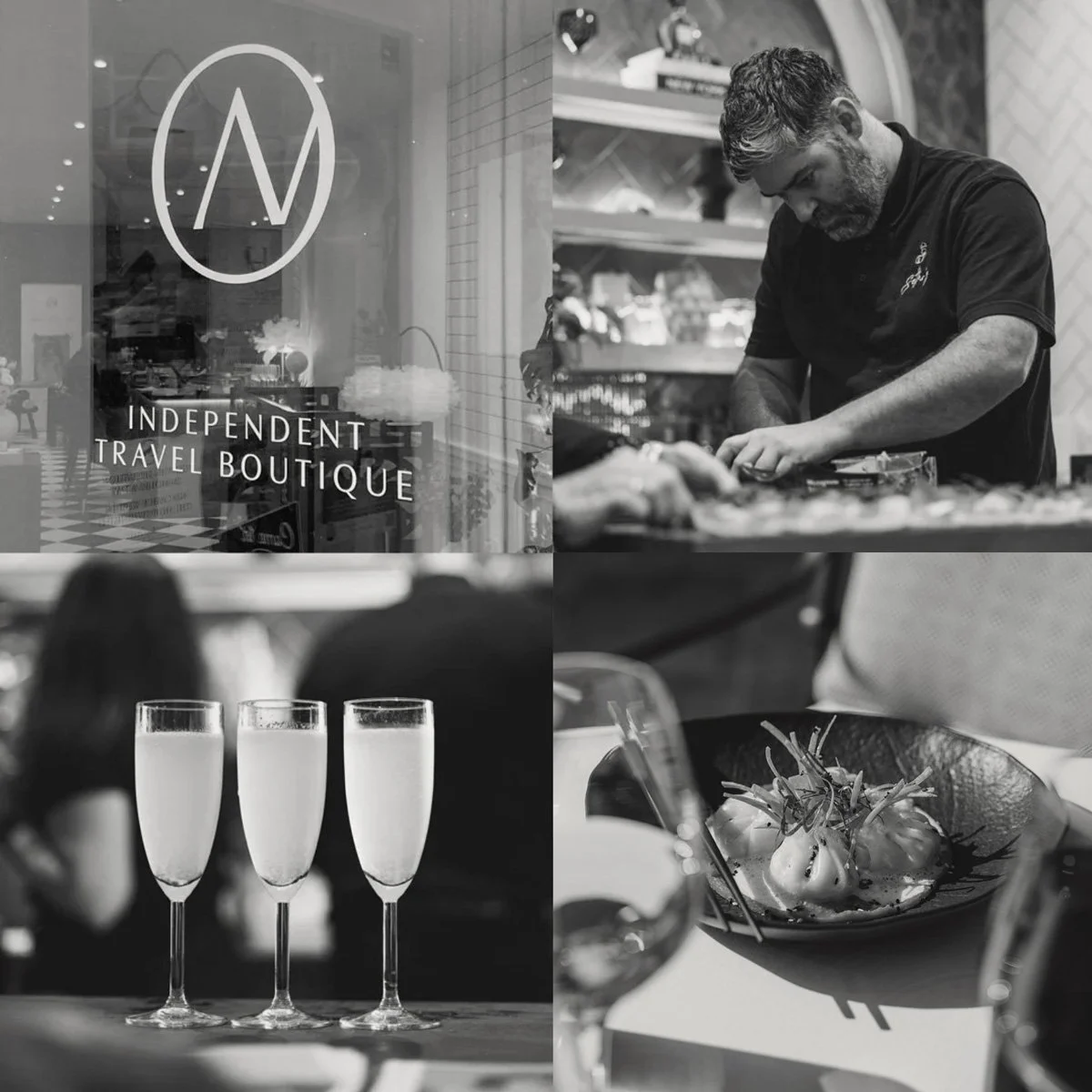
Our first Mauritius Supper Club, hosted in partnership with Beachcomber Resorts and Hotels, is an evening built around the flavours, music, and warmth of the island. Authentic Mauritian cuisine, live music and dancing, and insights from the Beachcomber team about their collection of resorts.
It is intimate by design. Around ten guests, a shared table, and an evening where you arrive curious and leave planning.
Mauritius has always been a destination that rewards conversation. The food tells you about the culture. The culture tells you about the people. And the people make you want to go back. This is an evening designed to start that conversation.
—
For the Curious
Mauritius is not a place you visit once. It is a place that settles into you slowly, through the food, through the warmth, through the particular quality of light that exists nowhere else.
If the island has been on your mind, or if it has not yet but should be, this supper club is a lovely way to begin.
Spaces are limited to keep the evening personal.
Tickets and full details on our website.