
The Hour Before the Heat
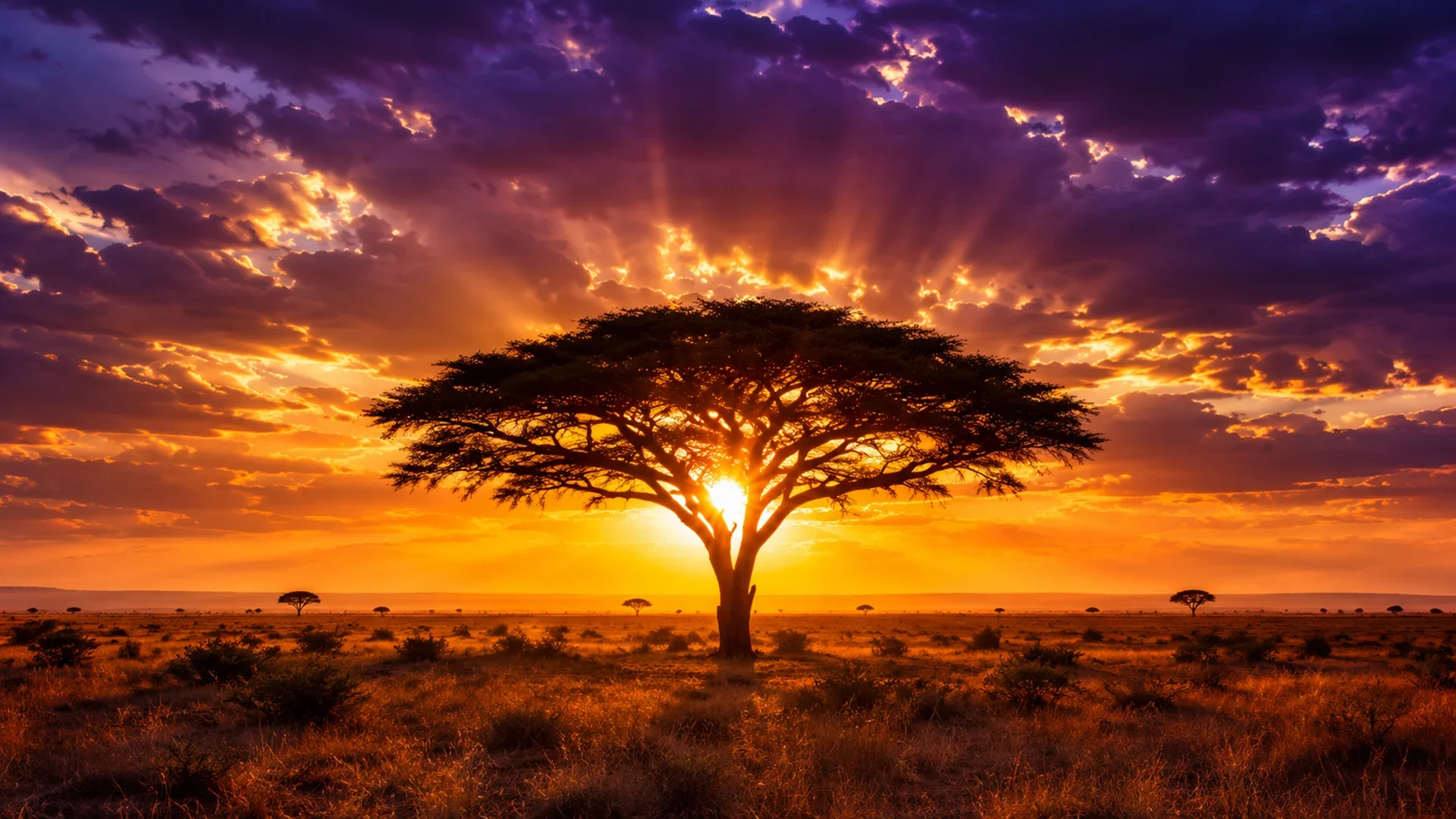
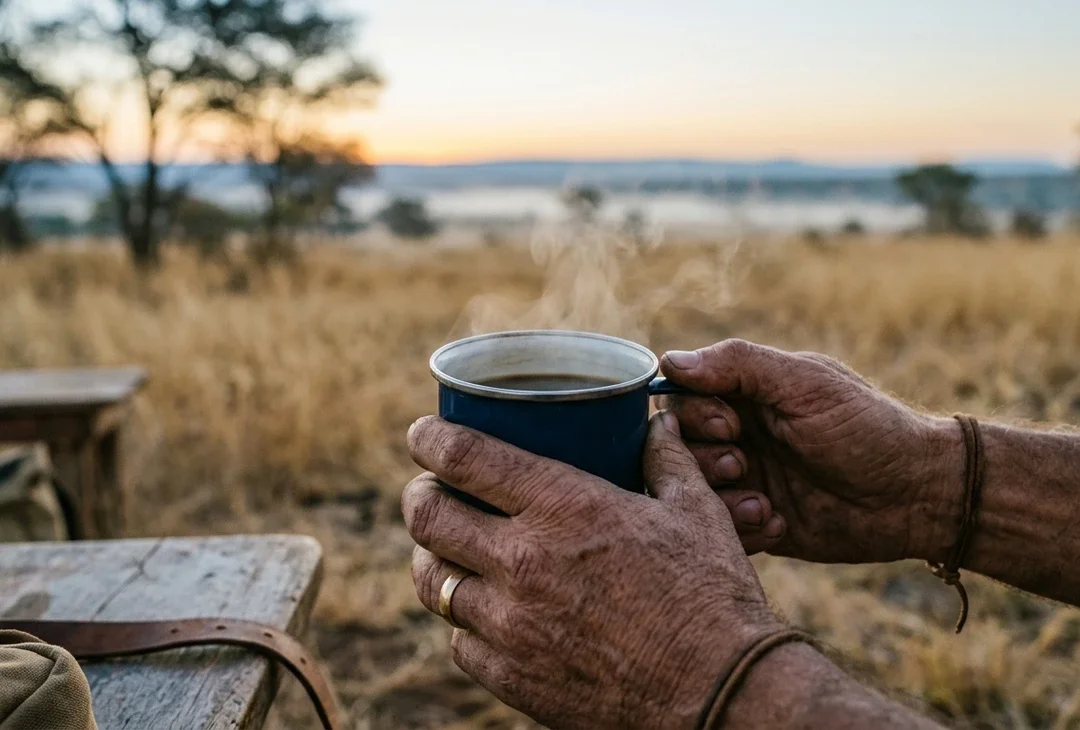
A safari wakes you at half past five, in the dark, with coffee you drink before you can see the cup. By half past six you are on the vehicle, wrapped in a blanket against a cold most people do not associate with Africa, watching the bush come back to itself as the light arrives. It is the earliest most of our clients have risen in years, and almost without exception it becomes the part they miss most.
We have been thinking about why that is. The safari is sold on the animals, on the big five and the thrill of the sighting, and all of that is real enough. But the people who come home changed rarely talk about the leopard first. They talk about the quiet. The cold air. The hour before the heat, when nothing is asked of them and the whole day is still folded up ahead. The restoration is in the rhythm, not the roll call.
—
The Borrowed Clock
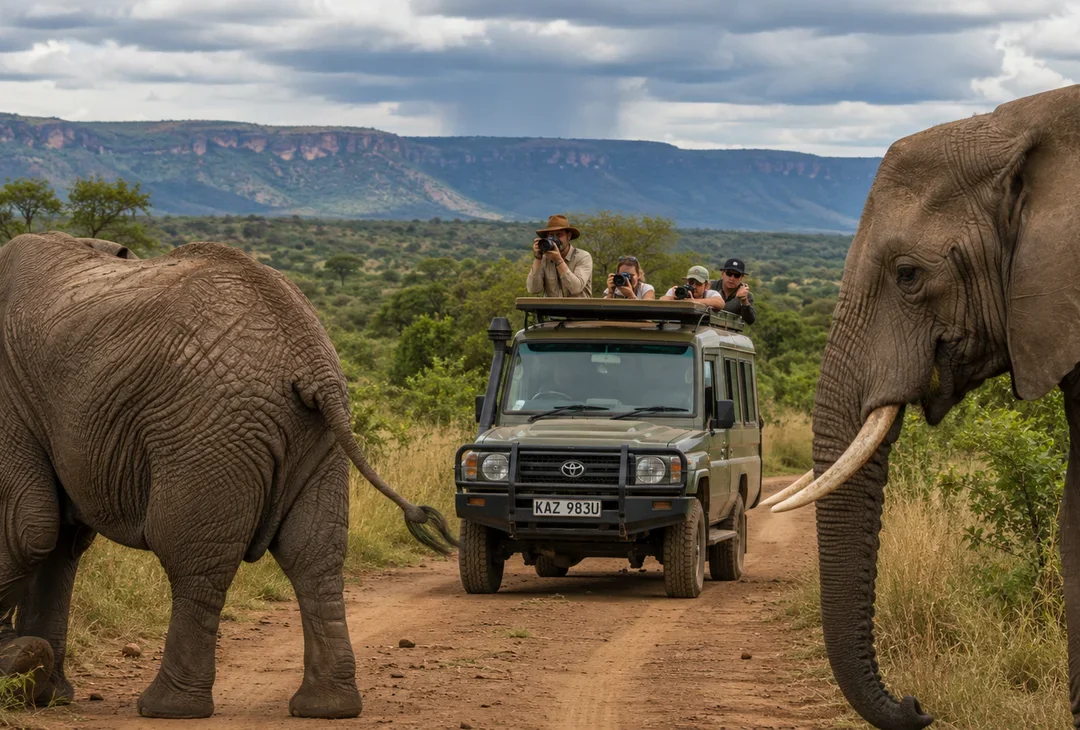
The bush keeps a clock you do not set yourself, and that is the first kindness of the place. You rise when the camp wakes you, because the animals are awake then and the day's heat is not. You go out twice, early and late, and the long middle of the day belongs to no one. There is a sighting or there is not. The vehicle stops, the engine goes off, and you sit.
This is the part that surprises people. Most of a game drive is not pursuit. It is stillness. A guide reads the ground, points out a bird you would never have noticed, lets the silence sit. There is no signal for your phone, and after the first morning you stop reaching for it. The clock is being kept for you, which means for the first time in a long while you are not keeping it yourself.
'The clock is being kept for you, which means for the first time in a long while you are not keeping it yourself.'
That is not how most of us travel, and it is certainly not how most of us live. We arrive somewhere with a list and we work through it. The bush will not let you. It gives you a rhythm and asks only that you fall into step. The falling-in is the whole therapy.
—
The Middle of the Day
Between the two drives there is a stretch of hours with nothing in them, and at home that would feel like waste. In the bush it feels like the point. The heat climbs, the animals lie up in the shade, and the camp goes soft and slow. You eat slowly. You sleep, or you do not. You watch a waterhole from a chair and feel no obligation to it.
This enforced pause is the thing modern travel has quietly engineered out. We fill the gaps. We optimise the day. We come home from a holiday needing a holiday, because we treated the holiday like a project. The bush does not offer that option. The middle of the day is empty by design, and a few days of it resets something that a city break, however lovely, leaves untouched.
'We come home from a holiday needing a holiday, because we treated the holiday like a project.'
—
What the Dawn Does
The early hour is the heart of it. The cold, the dark, the coffee, the slow blue light coming up over the grass before the sun clears the horizon. The bush is most awake at the edges of the day, and so, it turns out, are you. There is a clarity to that hour that does not survive into the afternoon, a sense of the day being entirely unspent.
Attention works differently out there. With nothing buzzing in your pocket and nothing to be productive about, you start to notice things. The way the light moves. The sound a single bird makes. The fact that you have not thought about your inbox since you woke. People describe coming back from the bush rested in a way a beach never quite manages, and we think this is why. The beach lets you switch off. The dawn switches you back on, but slowly, and to the right things.
—
The Considered Way
South Africa makes this easy in a way few places do. The greater Kruger and the reserves around it sit in a vast, largely unfenced landscape, and the camps within it are practised at the slow art of getting out of your way. The specialists we work with in the region know the difference between a lodge that performs luxury and one that simply lets the bush do the work, which is the difference that matters here.
There is wine country a short flight south, too, which is its own slow pleasure, and the two travel well together. But the bush comes first, and it comes for one reason. It is the most reliable reset we know of. Not faster, not fuller, not a list to be conquered. A few early mornings, a borrowed rhythm, and the particular quiet that arrives when something larger than you is keeping the time. You come home slower than you left, which is the whole idea.
Come find us at No.82.
hello@agentnouveau.com