
The Evening Train
—
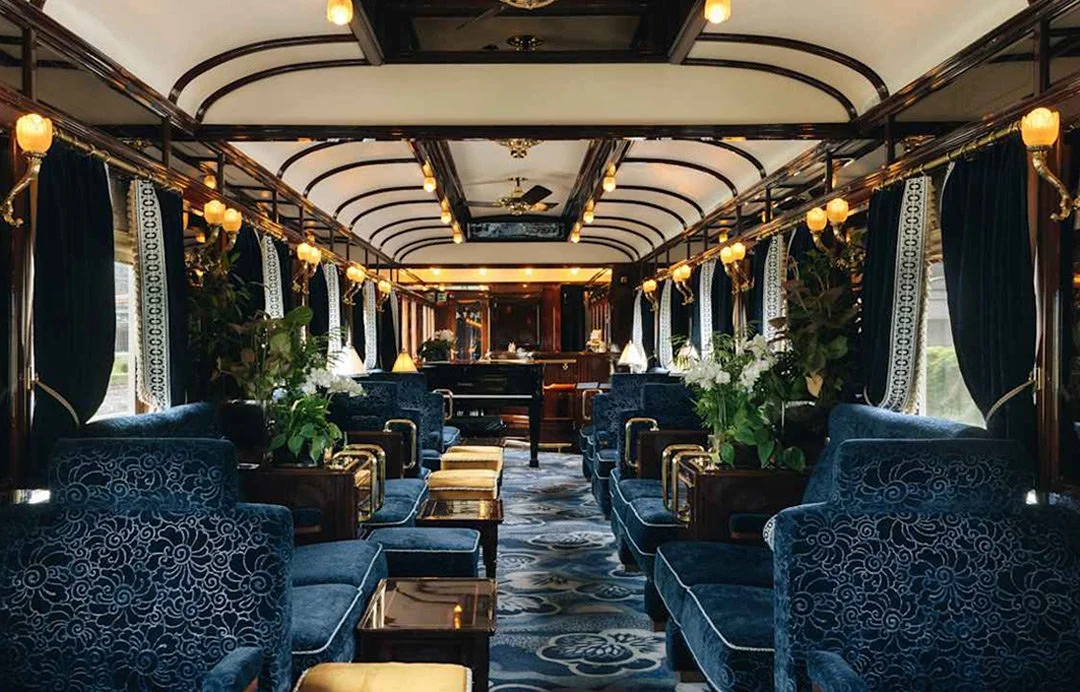
There is a particular way of travelling that has nothing to do with getting somewhere quickly. The Venice Simplon-Orient-Express was built for this. Not for efficiency. Not for convenience. For the experience of watching Europe pass by a window while someone pours you a glass of champagne in a carriage that was first upholstered in 1929.
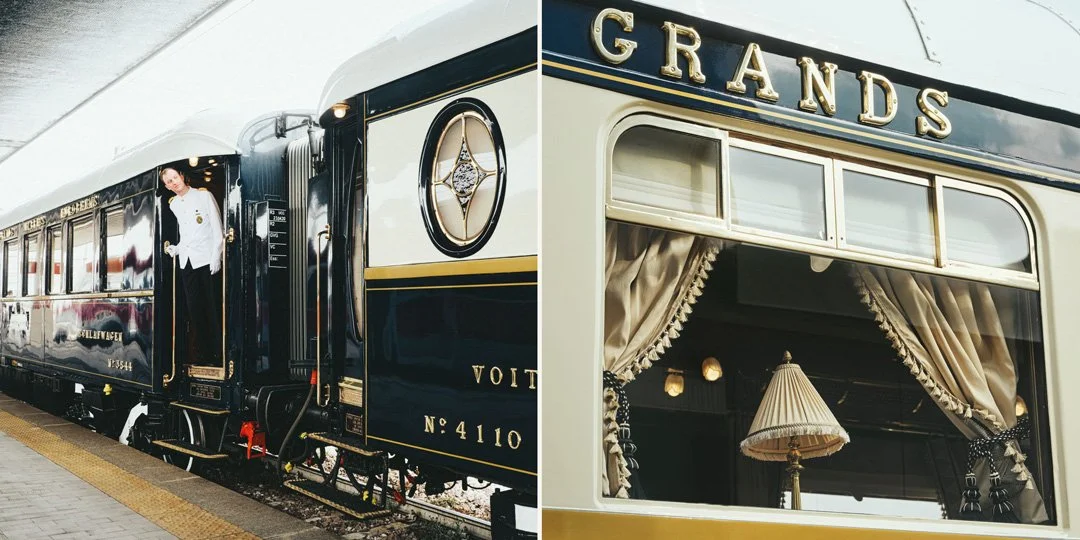
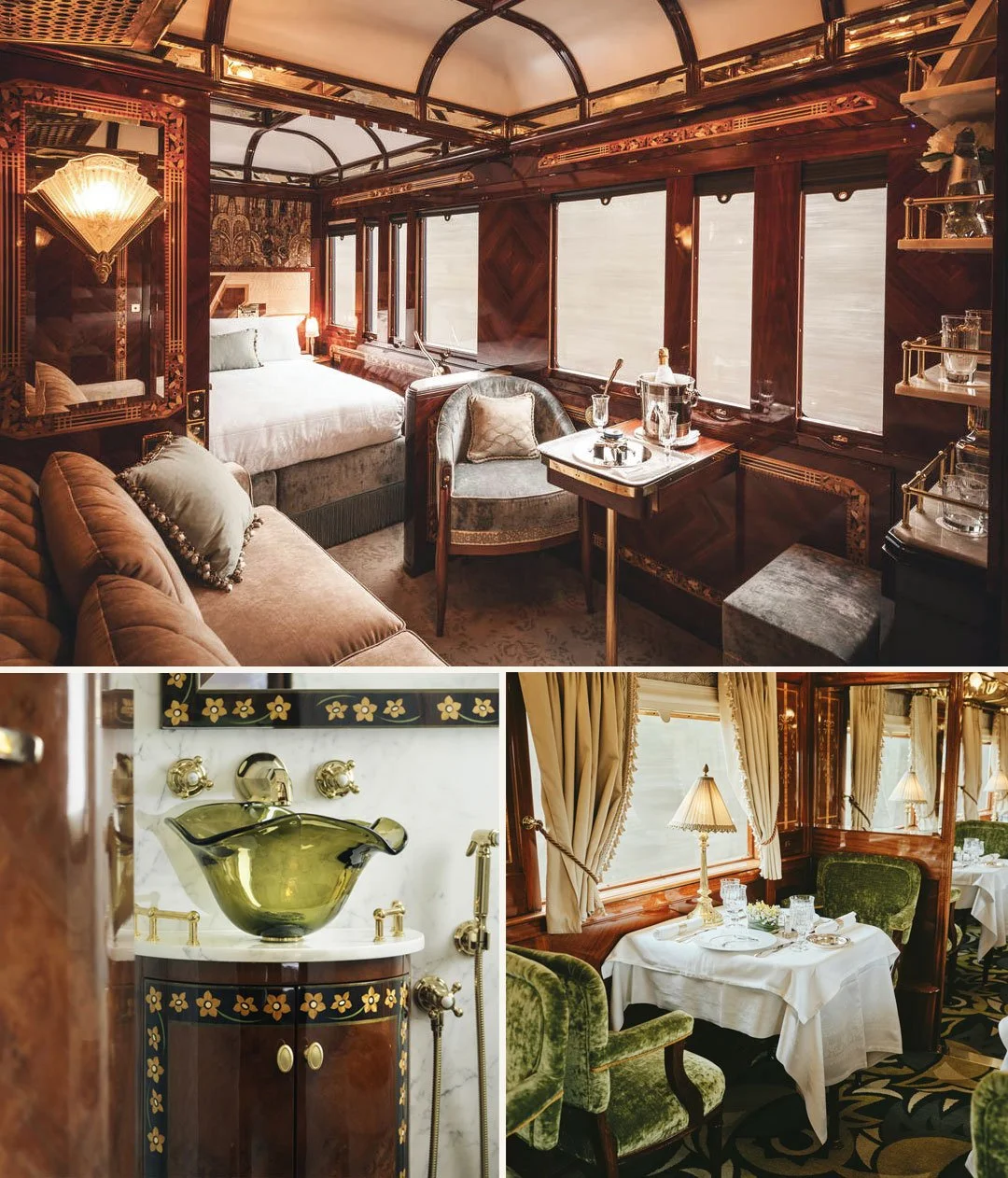
The train is composed of seventeen original sleeping cars from the 1920s and 1930s, each one restored to its original condition by hand. Polished wood marquetry. Art Deco panels sourced from across the continent. Brass fittings. Damask sheets. A washbasin concealed in a handsome wood cabinet. The steward converts your compartment from a daytime lounge into a sleeping berth while you are at dinner, and converts it back again before breakfast. You never see it happen. That is part of the point.
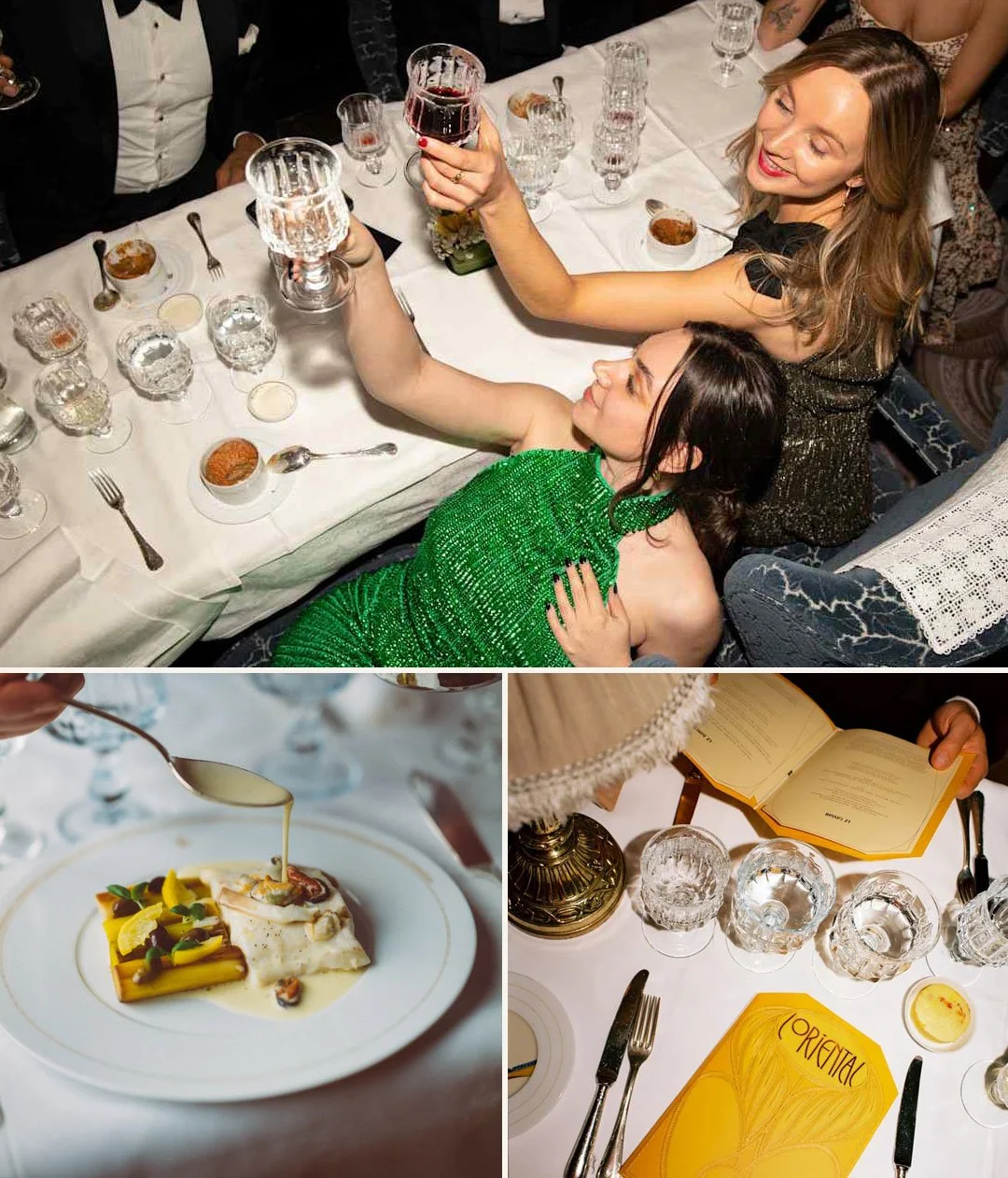
There are three dining cars. Etoile du Nord, Cote d'Azur, and L'Oriental. Each one has its own character and its own history. The menus change with the route and the season, using produce sourced from the regions the train passes through. Dinner is served as the landscape outside shifts from the French countryside into the Alps. By the time dessert arrives, you may be crossing the border into Switzerland or Italy, depending on where you are headed. The bar car has a baby grand piano.
This is a Belmond train. The same company behind Hotel Caruso in Ravello, Copacabana Palace in Rio, and Hotel Cipriani in Venice. The standard is not accidental.
—
The Routes
The classic journey is Paris to Venice. Overnight. You board at Gare de l'Est in the afternoon, dine as the train crosses eastern France, sleep through the Alps, and arrive in Venice the following morning. The city appears through the window as the train crosses the causeway into Santa Lucia station, surrounded by water. It is one of those arrivals that no airport can replicate.
But the route map has grown. In 2026, the train runs from Paris to Florence, Paris to Rome, Paris to Verona, and a once-a-year journey from Paris to Istanbul that follows the original 1883 route across the continent. There are routes to Vienna, Budapest, Prague, Amsterdam, and Geneva.
The newest addition is the Amalfi Coast. A three-day journey from Paris, travelling south through Italy with a guided stop at the ruins of Pompeii, before arriving in Ravello for a two-night stay at Belmond Hotel Caruso. The same clifftop palazzo, the same infinity pool above the Mediterranean, the same lemon-scented gardens we wrote about in our Ravello feature. Except this time, you arrive by train.
'The grand suites are the most expansive: a bedroom, living area, private marble bathroom, dedicated steward, and champagne that does not stop'
—
The Compartments
There are three tiers. The historic twin cabin is the original 1920s compartment: a daytime sofa that converts to upper and lower berths, a concealed washbasin, and shared facilities at the end of the carriage. It is compact, charming, and exactly as it would have been a century ago.
The suites are larger. Two interconnecting compartments with a separate sleeping area and a private en-suite bathroom. The grand suites are the most expansive: a bedroom, living area, private marble bathroom, dedicated steward, and champagne that does not stop. There are only six, each named after a city on the route. Paris. Venice. Istanbul. Vienna. Prague. Budapest. Each one with its own decor.
The dress code matters here. Evening wear for dinner is part of the experience, not optional. The train was built for an era when dressing for the occasion was the occasion.
'Today, the passengers are travellers who understand that the journey itself can be the destination'
—
The Passengers
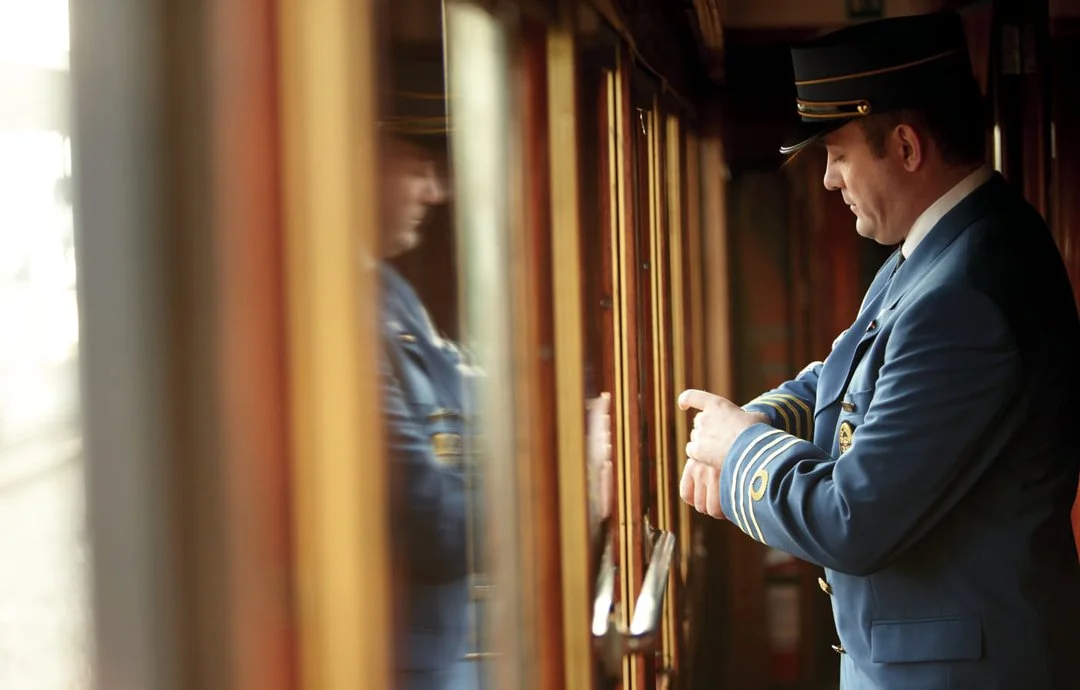
The Venice Simplon-Orient-Express has carried novelists, revolutionaries, spies, and film stars. Tolstoy rode these carriages. So did Marlene Dietrich. Lawrence of Arabia. Mata Hari. Agatha Christie set a murder on this train. Several films have been made about it since.
Today, the passengers are travellers who understand that the journey itself can be the destination. Couples celebrating milestones. Families marking something worth remembering. Solo travellers who want to sit in the bar car with a cocktail and a novel and watch the Alps go by.
It is not for everyone. But for the people it is for, nothing else comes close.
—
For the Unhurried
The Venice Simplon-Orient-Express is not a train journey. It is an evening, stretched across borders, wrapped in Art Deco, and served with a menu that changes somewhere between the Alps and the Dolomites.
If slow travel and beautiful places matter to you, this one belongs on the list.
Come find us at No.82.